
Tavaszi szél vizet áraszt (Spring wind floods water)
Spring wind floods water, my flower, my flower.
Every bird chooses a partner, my flower, my flower.
Well, who should I choose, my flower, my flower.
You choose me, I choose you, my flower, my flower.
Green ribbon, light clothes, my flower, my flower.
Because wind blows it easily, my flower, my flower.
~Collected by Sándor Veress
Top 10 reasons to visit Hungary
So much more than the city of Budapest, Hungary has lots to offer. Charming towns, breathtaking views of the Danube bend, thermal baths surrounded by wilderness, quaint villages, 230 million+ years of natural cave wonders, castles, vineyards & mouthwatering Hungarian food.


$2000 per person
14
days
23/08/23-05/09/23
Stay
Budapest
-
Stay at Studio88 Budapest
-
Location: On the Buda side with a magnificent view of the Hungarian Parliament
-
Rating: 4 out of 5
Eger
-
Stay at Krisztina Vendégház
Food Much
Vacilando Recommended* in Budapest
-
Pork Knuckle
Vacilando Recommended* in Szentendre
-
Aranysárkány
-
Dragon Buillon & Marrow on Toast
-
Roast Goose
Vacilando Recommended* in Holloko
-
Castellum Hotel
-
Wild Boar
-
Rosotto
Currency
Hungarian Forint [HUF]
Info on Tickets
Reduced entry applies on all tickets so if you're a student, ensure that you're carrying your student ID.
Nightlife
Ruin Bars
-
Szimpla Kert
-
Instant-Fogas


How do I go from the airport to the city center, Budapest?


Getting from the airport to the city center (Deák Ferenc Tér): The easiest way is to take the bus, 100E that costs 2000 HUF / 5.13 euros.
If you anticipate taking a metro pass, the bus, 200E, is included within the pass. It drops you to the metro station Köbánya-Kispest, from where you can take M3 into the city center.
What’s the best way to move around the city of Budapest?
Download ‘BudapestGO’ app, which includes all ticket options, based on the duration of your stay. You must VALIDATE your ticket to avoid being fined 12000 HUF / 30.81 euros.

What’s the best way to move around Hungary?
The best way to move around Hungary, especially if you’re planning to travel across the country, is to hire a car. Prices commence from 13 euros, and they do charge an additional 43 euros that covers tolls (which are available from gas stations as well and cost 20 euros for a minimum of 10 days). The 43 euros is supposed to cover any damages, tyre punctures etc, so it’s a form of insurance.

1.) Budapest (3-5 days)
A beautifully preserved city, being in Budapest is simply an architectural delight. As you stroll around the Danube river, you get to soak in both the Buda and Pest sides. Existing as separate cities historically, between 1839-1849 the Chain bridge was built to unite both cities as Budapest.
Plan to take a walking tour on both sides.

Buda Castle: Tickets are not needed for Buda Castle.
An expansive site, stroll through the castle area, which has been the seat for the Hungarian monarchs, Mongolians, Ottoman Turks, Austrians, Germans and Soviets.


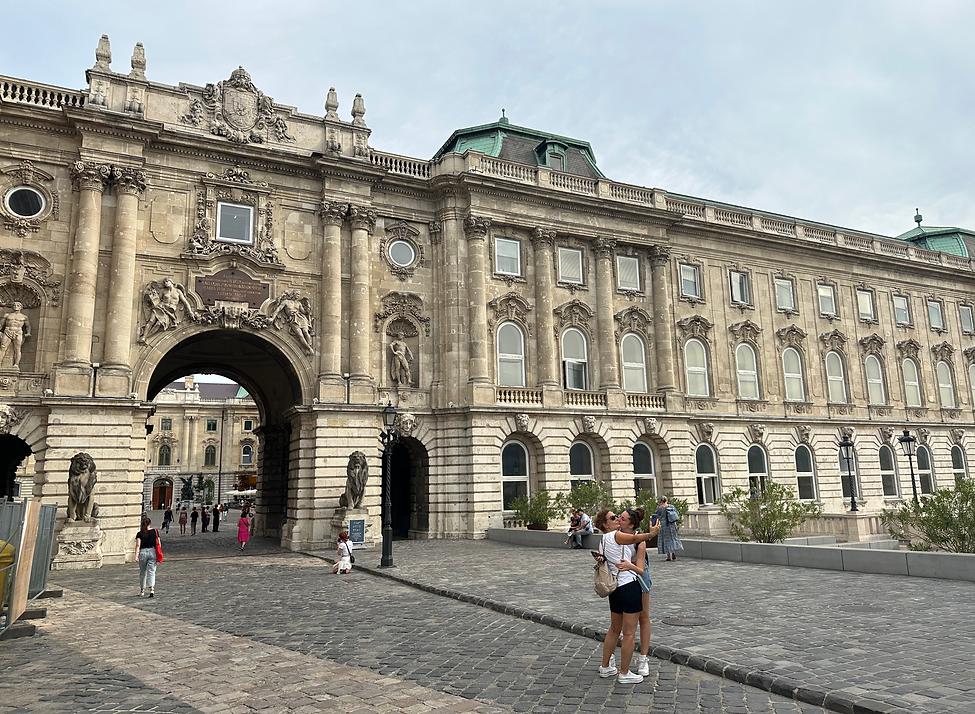


It has spectacular views of the Pest and on weekends, join in for some groovy partner dancing. Several buildings have been renovated to depict architectural styles of the past eras.


National History Museum:
Tickets: 3500 HUF / approx 9 euros; Free on the last Saturday of the month for students.
A must-visit, the museum has a permanent exhibition tracing Hungarian history, and a room that represents the Royal Palace from yesteryear. The basement has an amalgamation of different experiences representing an aqueduct, King’s cellar, soldiers resting ground, chapel etc., to provide insight into life during the monarch's rule.


National Gallery of Art:
Tickets: 4400 HUF / approx 12 euros; 4800 HUF includes any ongoing exhibition / approx 13 euros
Spread across three floors, the gallery houses some of the prominent Hungarian artists, including Czobal Bela, Bereny Robert, Ferenczy Karoly, Vimos Aba Novak, Vaszary Jano and Madarasz Viktor. We had the opportunity to see a special exhibition of Gulacsy’s work, who was inspired by poetry, literature and magic, which is captured in his paintings in the form of self-portraits and his observations of the world around him. A distinctive red remained his go-to color.


Fisherman Bastion:
Tickets are not needed.
From the Buda castle, walk towards the Fisherman Bastion, where you will find the Matthias Church, built in gothic style with patterned tiles on the exterior ceiling that served as a coronation church for Hungarian Kings and as a mosque during the Ottoman rule. The bastion used to be protected by the fishermen during the middle ages, thus the name. The present tower was built in the 19th century with a purpose of providing a panoramic view of Pest and the seven turrets represent the seven tribes that arrived in Hungary from Asia in the year 896.


Statue of Liberty:
Located atop Gellért Hill, you see the statue of liberty that was built by the Soviets representing Hungary’s liberation, even though that’s not how the Hungarians viewed and experienced Soviet occupation. When the Soviets left, the statue was covered by a white sheet for three days so that it could be renewed and thereafter, symbolizes Hungarian independence and freedom.
Hungarian Parliament:
It’s only from the Buda side that you get to see an incredulous view of the Hungarian Parliament, so do ensure that you make a trip to Buda, both during the day and night to soak in the utmost grandeur that stands tall in the form of the Parliament.
Built across 1885-1902, the parliament building is a grand symbol of Budapest. Built in neo-gothic, baroque and renaissance architectural style, its magnificent presence adds tremendous character to the city of Budapest.


Built across 1885-1902, the parliament building is a grand symbol of Budapest. Built in neo-gothic, baroque and renaissance architectural style, its magnificent presence adds tremendous character to the city of Budapest.

Pest is known for,
Deák Ferenc Tér:
The city center is buzzing with restaurants and cafes, including the famous chimney cake that is a must-try, Molnár Kürtóskalács is highly recommended.


St. Stephen’s Basilica:
Seven tribes from Asia traveled to Hungary and decided to unite so that they could form a country together. A unanimous decision was made to crown St. Stephen as the first King of Hungary. These tribes were pagans and worshiped nature, however, Stephen realized that if Hungary was to build a relationship with the Europeans they would need to adopt Christianity.
Currently, St. Stephen’s right hand is embalmed in the Basilica and with a strong cult following even today, there is a march that is held every August to celebrate St. Stephen and his holy right hand. St. Stephen’s basilica and the parliament are the exact same height, 96 mts representing the year that the tribes arrived in Hungary, 896. You can go to the top of the basilica and enjoy the view of Buda.

Heroes square:
A landmark in Budapest, the square houses the Millennium memorial, which was built in 1896 to commemorate 1000 years since the foundation of the Hungarian state in 896. In 1896, Hungary was still part of the Austro-Hungarian empire and five spaces of the statues were reserved for the Habsburg dynasty. Every year, a march that celebrates St. Stephen & his holy right hand, walks through heroes square.


Danube shoes memorial:
Along river danube on the Pest side, you will find 60 pairs of shoes built from iron symbolizing the thousands of Hungarian Jews who were made to remove their shoes, shot and thrown into the danube during 1944-1945.

Dóhany Street Synagogue:
Located in the Jewish quarter, Dóhany Street Synagogue is the largest synagogue in Europe and the second largest synagogue in the world.


Opera House:
Considered an art relic, enjoy the Opera House as you walk around the city. Check out ongoing events throughout the year.

Central Market Hall:
Spread across three floors, the central market hall houses souvenirs and traditional Hungarian cuisine that must not be missed. The market closes at 6 pm and is shut on Sundays.
Ruin bars:
The story goes that whenever the Hungarians don’t know what to do with a building, they turn it into a bar :) Primarily in Budapest’s Jewish district are a series of ruin bars where abandoned warehouses, parking lots, and historical buildings have been quirked up, to create super vibey spaces. The most famous one remains Szimpla Kert that turned a stove factory and a few homes that were set to be demolished into a pub in 2002. Apparently, this set the trend for a generation of ruin bars. The biggest one remains Instant-Fogas, with artsy bars and dungeon clubs, it is also the meeting point for a pub crawl.


2.) Thermal Baths:
Hungary is known for its incredible thermal baths and it is a must-have experience. The thermal baths emanated during the Ottomans as it was the primary way of bathing, and thereafter, during the Austrian rule, these thermal baths were expanded above ground.

Within Budapest, the most famous ones remain Széchenyi & Gellert, which are both outdoor thermal baths.
Rudas, is one of the few thermal baths from the Ottoman period. During summer weekends, the baths are open until 3 am, and one of the highlights includes a terrace hot pool with the view of Pest, truly an unparalleled experience.


Close to the town of Egar, are several thermal baths including Egerszalok thermal bath, which is known for its salt hill formations and surrounded by wilderness making for a marvelous experience. During summers, Egerszalok thermal bath closes by 7 pm. However, within the vicinity, there are thermal baths that stay open until 9:30 pm, and cost half the price.
Egerszalok thermal bath: Cost, 4200 HUF / 10.78 euros
Getting here: If you don’t have a car, you can take the bus 3450 from Eger, it costs 800 HUF per person / 2.05 euros for a return journey


3.) Szentendre
Getting here: Take the train, H5 from Batthyány Tér.
Cost: Add an extension ticket to a single ride ticket or pass for 900 HUF / 2.31 euros for a return journey
Boat rides are also available for 5500 HUF / 14.13 euros for a return journey


30 minutes away from Budapest, Szentendre, is a must-visit. Located by the Danube, it is an epitome of charm, with its cobblestone streets and scenic views, playing home to the artistic community. One can easily spend a day getting lost in the tiny alleyways that only open up to more wonders.
Food recommendations in this town include:
-
Álomlángos for langos
-
Levendula for gelato


4.) Visegrad
Getting there: Accessible by train and ferry or boat, Visegrad and Szentendre can be tied into a day trip.
Entrance fee: 2000 HUF per person
Visegrad is an absolute must-visit, known primarily for its castle that has been renovated and preserved, the views from the castle are breathtakingly spectacular, unlike any other place in Hungary.
The castle is known as the site of diplomacy since it was here that Charles Robert mediated a conflict, convincing the Czech ruler to not occupy Poland and the Polish King compensating in return. Mainly used by the monarchs, King Mathias who was known for his militaristic strength, expanded the castle during his reign.



5.) Eger
Getting here: From Budapest, take the IR87
Cost: 5000 HUF per person for a return journey
Student rates, 2400 HUF for a return journey
Located in the northern countryside of Hungary, this little town is a perfect gateway from city hustle bustle. It can be used as a great base for thermal baths, vineyards and the Aggtelek caves that are located closer to the Slovakian border.


The center of town has a church, a castle which is known for the longest siege that the Hungarians managed to hold during the Ottoman rule, as well as the minaret that was eventually built by the Turks as a sign of their victory. Inundated with small cafes and restaurants, the center square is filled with music and buzz until 9 pm after which it retires for the night.


A fun way to move around Eger is to rent e-scooters from the streets. You can scan the QR code of a scooter in the Lime, Bird and Egret apps and then move about the cute town. The scooters can only move around designated areas and turn off as soon as you cross them.


6.) Vineyards
Hungary is known for its exquisite wine and wine tasting is available across the country including Eger and Lake Balaton. We visited the Valley of Beautiful Women in the town of Eger, which has a plethora of wine restaurants right next to each other, making you spoilt for choice. These restaurants have been carved into a mountain, making for the perfect storage with the exact cool temperatures that are needed to make the most delicious wine. We would highly recommend the local Egri wines.


7.) Aggtelek caves
Getting there: From Eger, take bus 1054
The bus drops you off right in front of the caves.
Cost: 4750 HUF per person
The Aggtelek national park has 300 caves and holds incredulous sights from natural formations that have been in play for 230 million+ years. One can only enter as part of a tour, which is only offered in Hungarian at the moment. A distinctive feature of these caves is the remnant of fire and smoke that was used by prehistoric people, resulting in stalagmites and stalactites still having a darker shade. With a sound cave dedicated to concerts, a river that connects Slovakia in addition to reflecting the ever-evolving cave landscape, it makes for a worthy visit. A stretch of these caves are accessible through the Slovakian side and if the water levels are high, one can explore the caves in a boat, which also makes for an extremely unique experience.


8.) Holloko
A 14th century village, Holloko is a must-visit. Declared as a UNESCO world heritage site, it’s a quaint town with old school Hungarian homes, wooden architecture, farms and orchards that existed before modern farming started. The village has not only been preserved but inhabited even today.


Spend the morning walking the streets, as you cross the oldest church and then ascend to have lunch at Castellum Hotel, where we enjoyed the most marvelous Hungarian meal. We enjoyed the Risotto and wild boar.


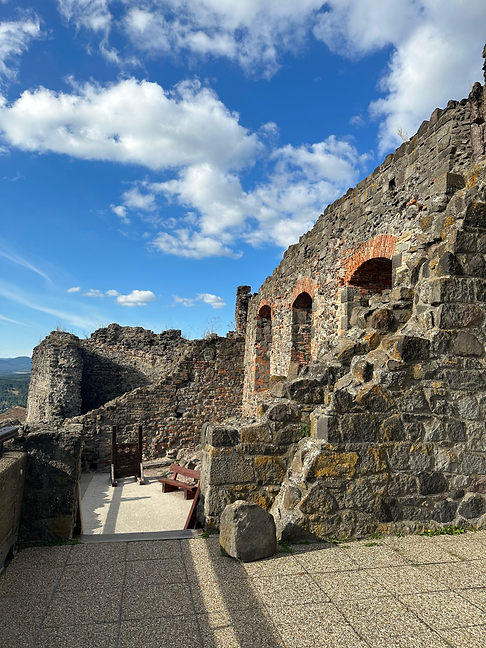
Make your way to the Holloko castle, which was built after the Mongol invasion in the mid-13th century, and eventually captured by the Ottomans in 1552.
Pictures don't do justice to panoramic views of Holloko village from the castle.


9.) Lake Balaton
The largest lake in central Europe, a trip to Lake Balaton makes for a relaxing getaway. Given the fertility and temperature of the lake, the conditions have been most conducive to wine production for the last 2000 years. You can take a day trip or spend a few days soaking in the sun, dipping in as you sip on wine.
10.) Hungarian Food
The Ottoman's love for paprika remains and is used in almost all Hungarian dishes!
Must-try's:
Goulash, a beef stew with an array of vegetables and paprika.
Langos, a Russian specialty, it’s fried bread with cheese and sour cream.
Chimney Cake (featured earlier), considered the oldest pastry of Hungary, it’s a dessert that must be had in all its many flavors, including cinnamon, vanilla, walnut.
Other than the staples the Hungarian's love their roast meats with duck, boar, beef, and chicken featuring prominently in the menu.


