Revolution
"You say you want a revolution
Well, you know
We all want to change the world
You tell me that it's evolution
Well, you know
We all want to change the world
You say you'll change the constitution
Well, you know
We all want to change your head
You tell me it's the institution
Well, you know
You better free you mind instead" The Beatles
Lebanon is a small country and within a span of two hours one can drive from the North to the South, East to the West. We spent 9 days in Lebanon out of which 4 days were spent in Beirut and the remaining days we drove up to North and South Lebanon. Typically, companies organize day tours because Lebanese driving is considered chaotic, but since, we grew up and learnt how to drive in India, we felt much at home ;) Moreover, organized day tours are highly overpriced and with the flexibility of a car we were able to spend the night in towns that we enjoyed.


$1100 per person
9
days
12/29/19-01/07/20
Getting There
Flight from Cairo, Egypt to Beirut, Lebanon
-
Duration: 75 minutes
-
Airline: Middle East Airlines
-
Cost: $120 one-way
Stay
-
Location: Fantastic location
-
Rating: 3.5 out of 5
Neighborhoods for cafes, restaurants and bars in Beirut
-
Hamra
-
Gemmayzeh
Byblos
-
Byblos Sur Mer: $160 per night
-
Location: 10-minute walk to Byblos ruins, along the coast and overlooking the sea
-
Rating: 4 out of 5
Cedars of God
-
White Cedars Hotel: $140 per night
-
Location: 15-minute walk to Cedars of God Forest
-
Rating: 3.5 out of 5
Tyre/Sour
-
Le Boutique: $190 per night
-
Location: Along the coast and overlooking the sea
-
Rating 5 out of 5
-
Comments: Jacuzzi in the room
Food Much
Lebanese Cuisine
-
Safia Balbekia [must -try in Baalbek], Kebab bi Karaz; Moughrabiye; Asbit Djeij; Kibbe; Sfiha; Manouche; Kaak; Makanik; Grilled Halloum; Fatayir Sbanikh; Saj
Currency
LBP - Lebanese Pounds
Info on Tickets
Reduced entry applies on all tickets so if you're a student, ensure that you're carrying your student ID. All tickets are available on site and only cash in LBP.
Car Rental
Honda CRV (AWD): $60 per day
Lebanon has a fantastic vibe and locals are enthusiastic to share all about their culture, food and lifestyle. After our travel escapades in Egypt, Lebanon seemed much more calm and organized. The country is currently amidst an economic crisis, but Central Beirut seemed immersed in wealth and possibly it is this growing disparity that is troubling folks, in addition to all the other factors [such as corruption, lack of Government accountability] that has led to a revolution led by the people. Lebanon as a country is quite expensive so if you’re traveling within a budget, be prepared to stretch those pockets.


9 days in Lebanon
Day 1-4: Beirut
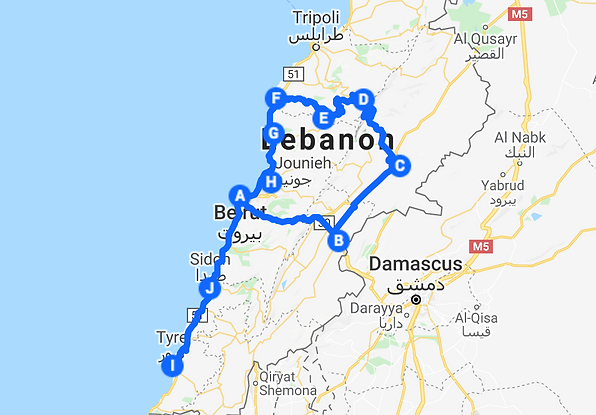
Day 5: Drove from Beirut to Aanjar, Baalbek, Beqaa Valley
[The plan was to spend the night in Cedars of God, but because of snow and blocked roads we drove and spent the night in Byblos instead]
Day 6: Morning in Byblos; Afternoon drove from Byblos to Cedars of God [using the route of Tripoli]. Spent the night in Cedars of God.
Day 7: Morning in Cedars of God; Lunch at Batroun; Drove from Batroun to Tyre or Sour and spent the night in Sour.
Day 8: Morning in Sour; Late afternoon drove and took a pit stop in Saida or Sidon. Returned and spent the night in Beirut.
Day 9: Morning in Beirut; Flight out in the afternoon.


Beirut
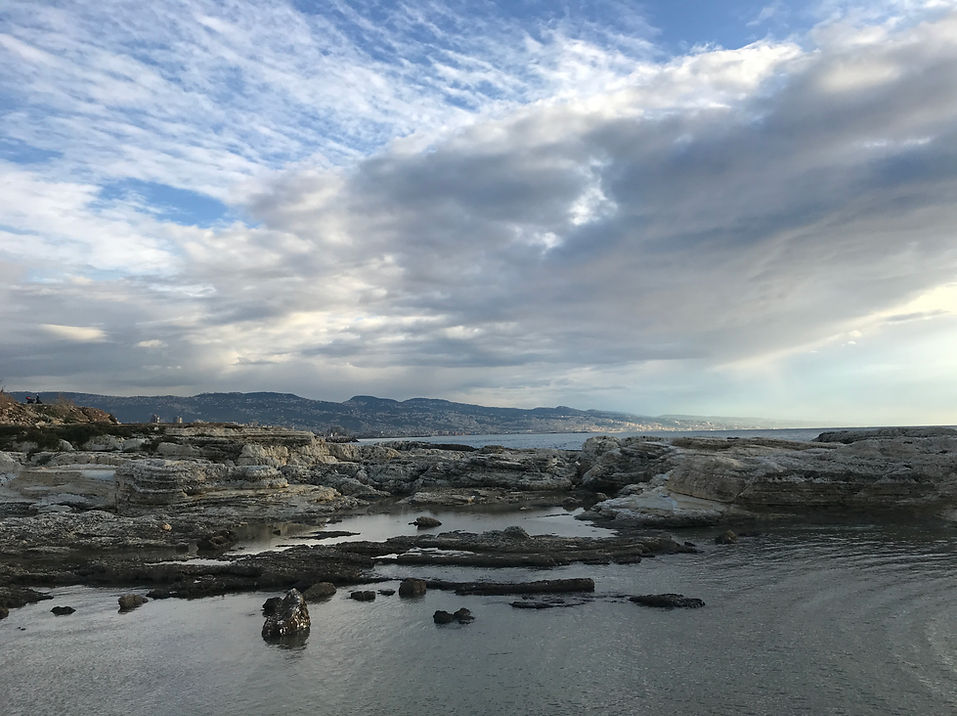
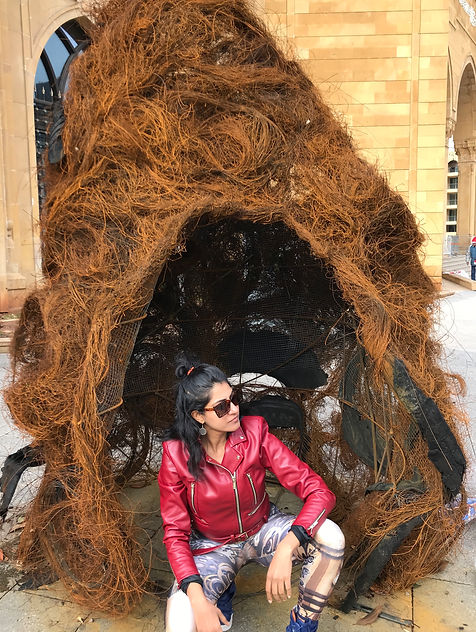
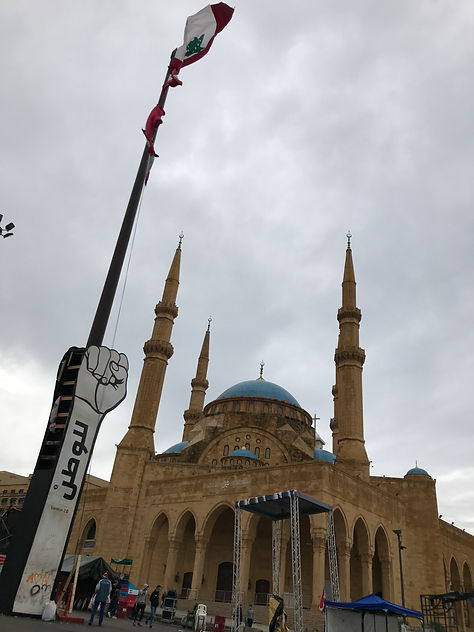
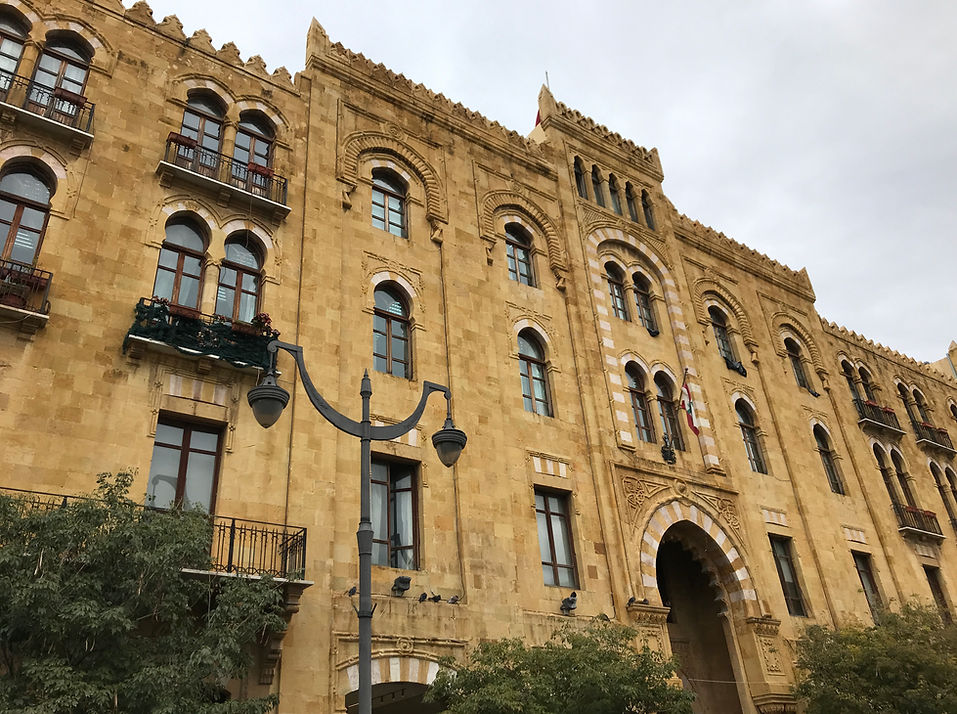
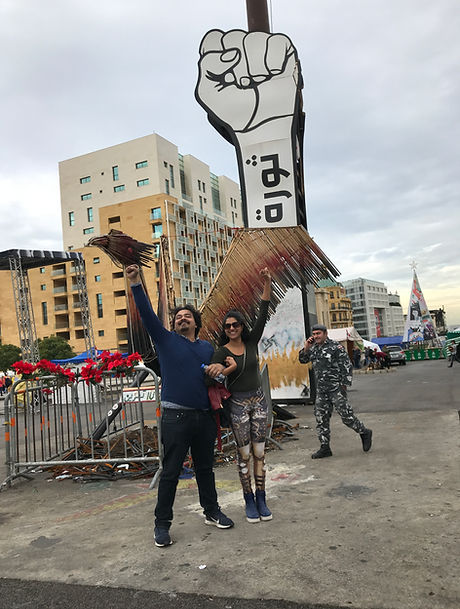

Beirut is known for its all-night celebrations and wild parties, making it a super fun city. One can easily spend a week, especially exploring the neighborhoods of Hamra and Gemmayzeh.
We did a DIY walking tour in Beirut and some of the sites in Central Beirut include:
-
National Museum of Beirut
-
Nejmeh Square
-
Maghen Abraham Synagogue
-
Grand Serail Parliament Building
-
Roman Baths
-
Beirut Souks
-
Al Omari Mosque
-
Al Amin Mosque
-
Garden of Forgiveness
-
St. George’s Greek Orthodox cathedral
-
Martyrs Square
-
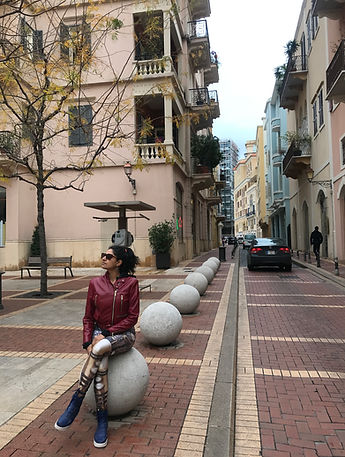
Saifi Village (Ottoman architecture)
-
St. Nicholas Steps
-
Raouche Rocks by the coast
Additionally, I would HIGHLY recommend taking a free walking tour of Beirut to gain insight into the several civilizations and historical context of Bayrouth. I have attended several free walking tours across the world, but this was by far one of the best!
Aanjar [1.5 hours from Beirut; Spent 1.5 hours at the site]
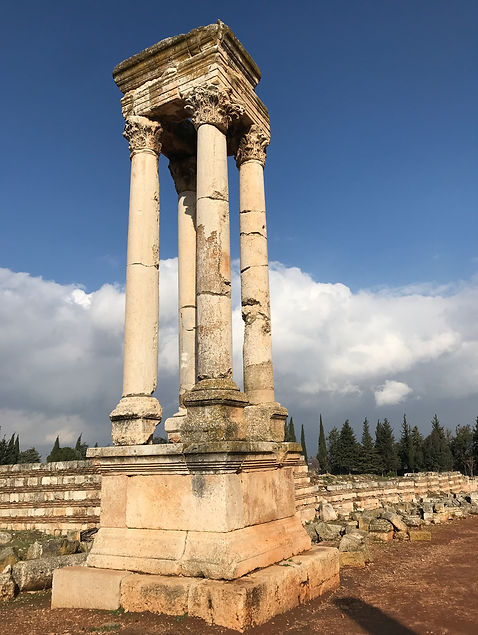
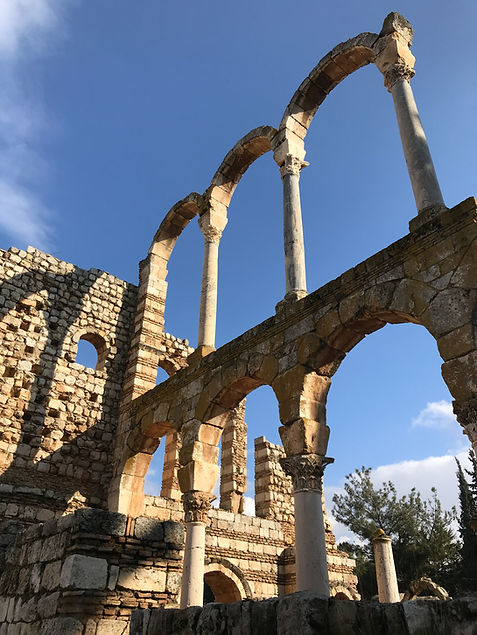
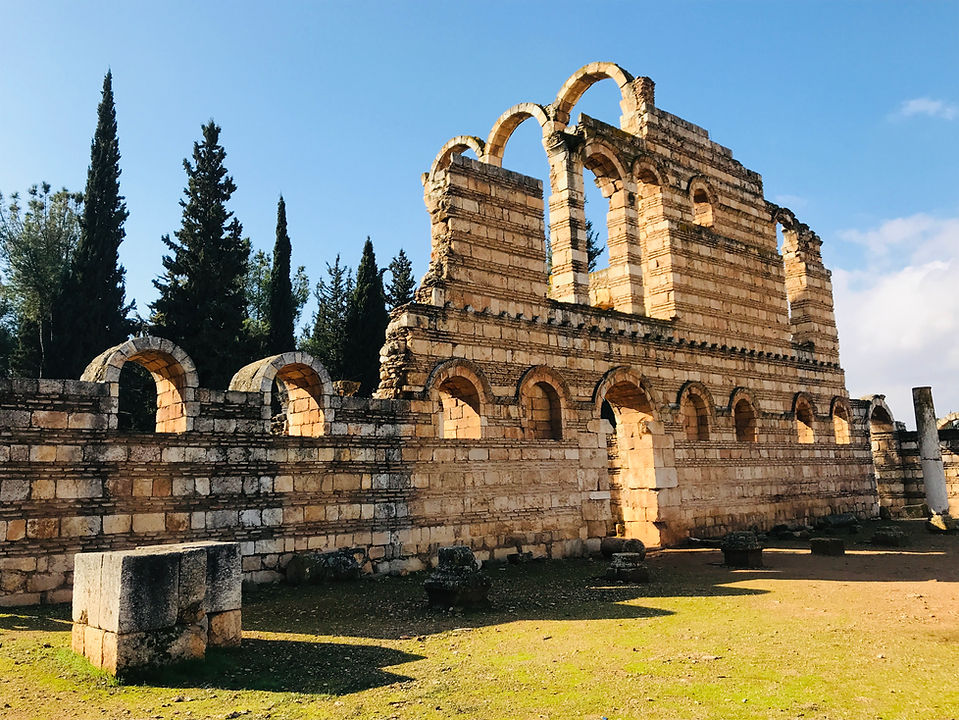
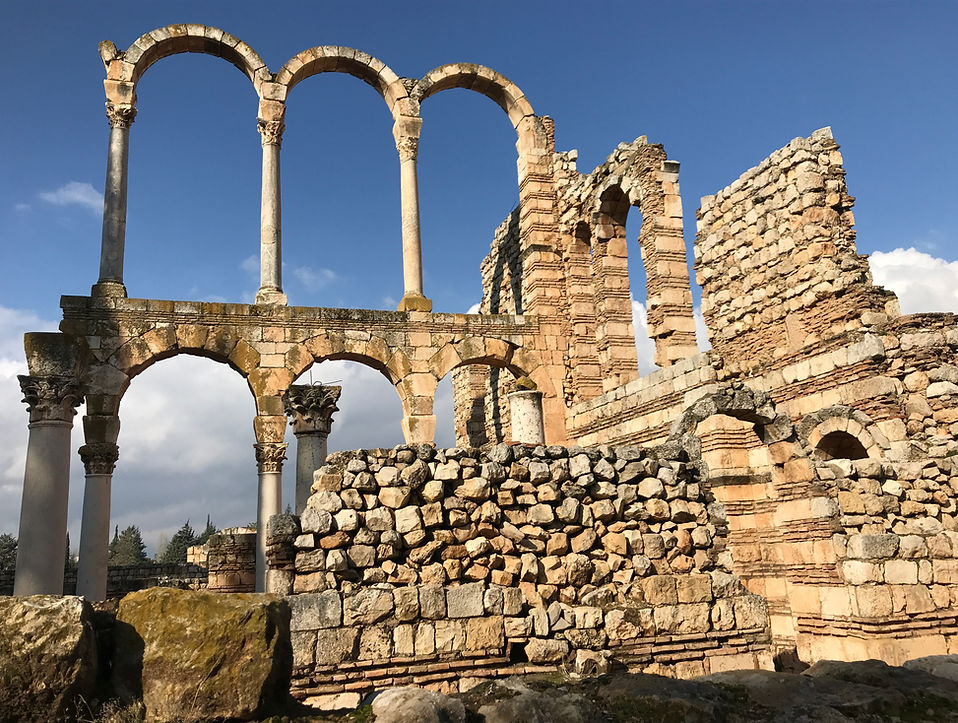
At the crossroads of two routes, one connecting Beirut to Damascus and the other linking Homs, a city in Syria to Palestine via the Bekaa Valley is the city of Aanjar. As part of the Arab reign the Umayyads was an Islamic Caliphate from Mecca and under Caliph Walid Ibn Abd Al-Malak (705-715) this commercial center was founded in the 8th century. There were 600 shops that were being run by traders and merchants. Within the vicinity was a grand palace, four smaller palaces, a mosque, public baths and the residential quarters of the merchants. Under the Umayyads, the city existed only for 30 years.

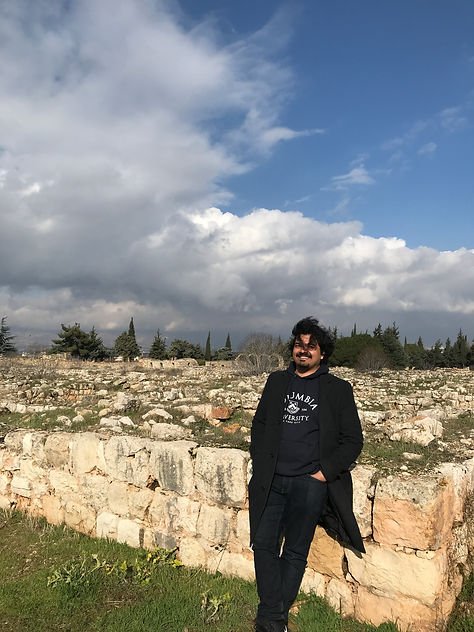


Within the complex of Aanjar, architecture from the Greco-Roman era is clearly evident as well. Since, each of these sites were placed in strategic locations, each civilization found themselves building over each other leading to a shared amalgamation of cultures and architectural designs. We bought tickets at the entrance and spent around an hour walking through the entire complex re-imagining the lives of those that had roamed the same streets.
From Aanjar we drove to Baalbek.
Baalbek [Spent 2 hours at the site]
-
Temple of Jupiter
-
Temple of Bacchus
-
Museum
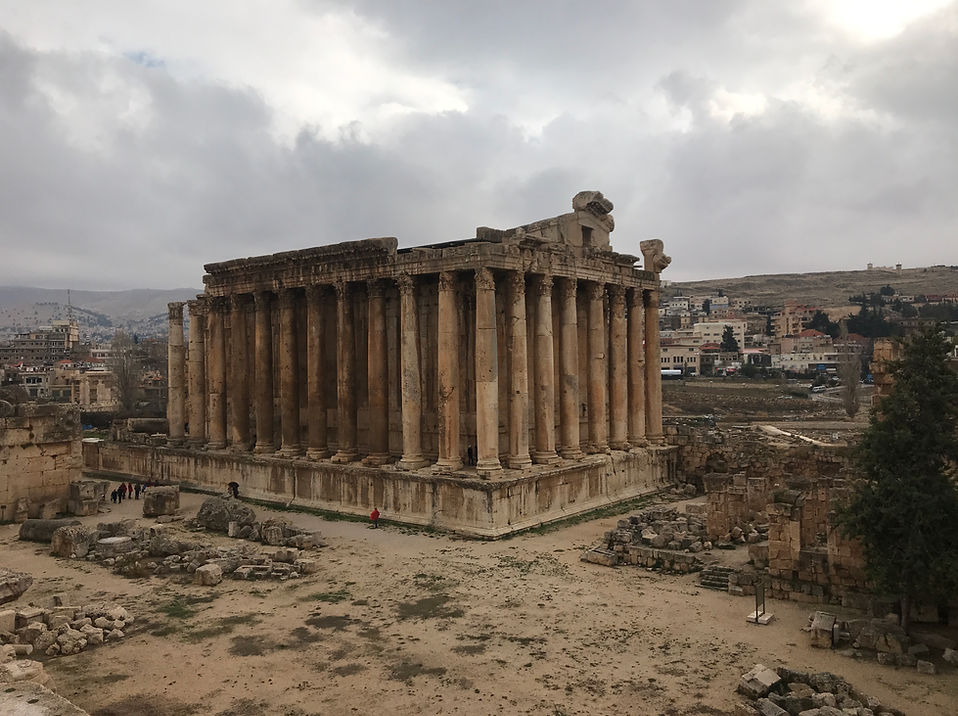

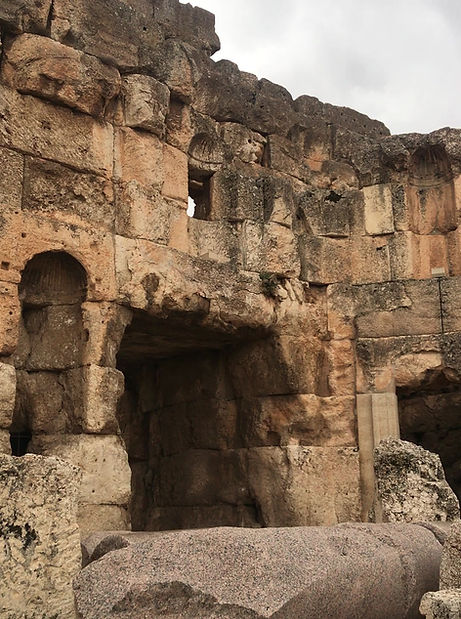
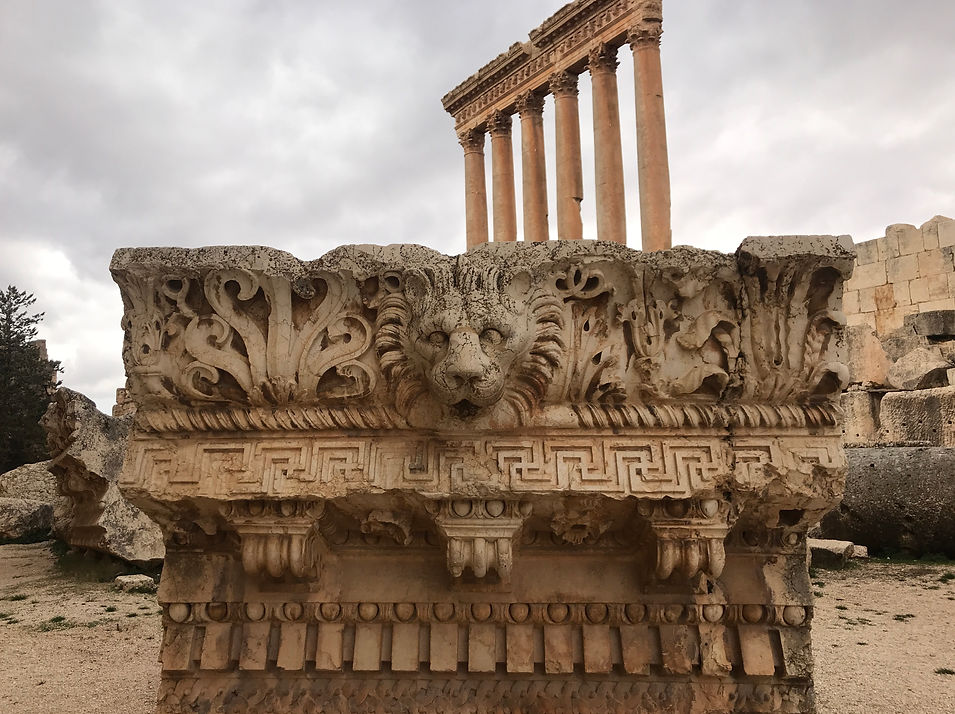
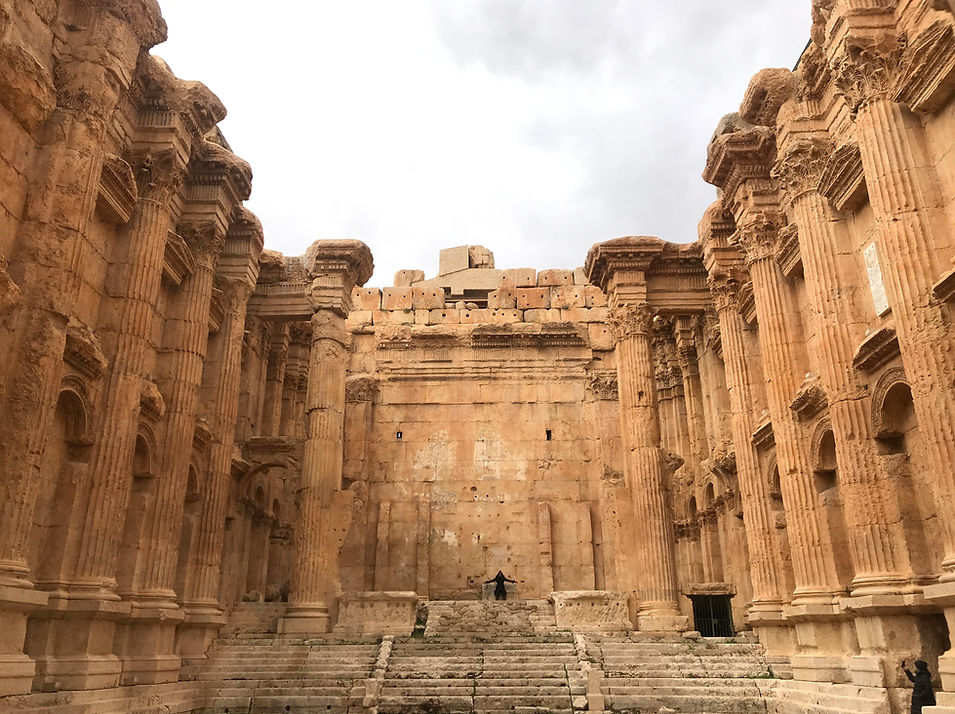
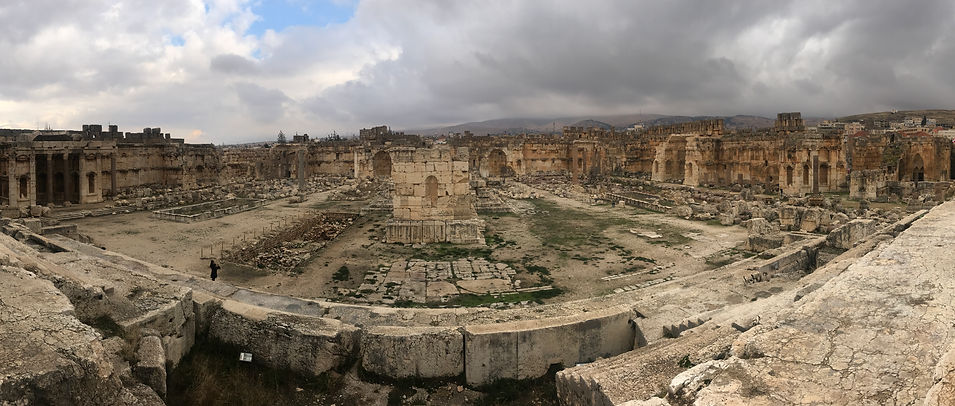
10 kilometers away from the Syrian border is the town of Baalbek. With ruins from the Greco-Roman period (333 B.C. - 395 A.D.), Baalbek included the triad of the Heliopolis (Jupiter, Venus and Mercury). The temple of Jupiter was considered the biggest Roman temple in the world. Within the complex is a temple dedicated to Bacchus, the god of wine, which remains well preserved till today. For the Romans, the city of Baalbek was strategically important. Roman architecture has always been larger than life and as you stand next to the Temple of Jupiter and Bacchus, you find yourself craning your neck high as the pillars aspire to unite with the sky. Depicting nature and animals, a lot of the engravings illustrate animals such as lizards, lion and serpents.
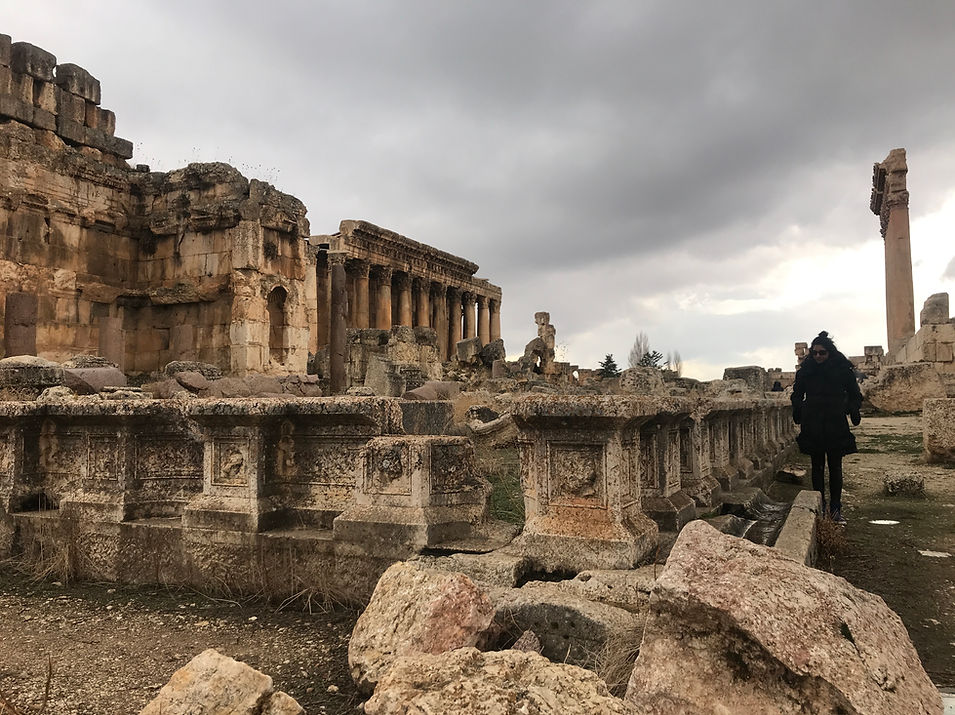


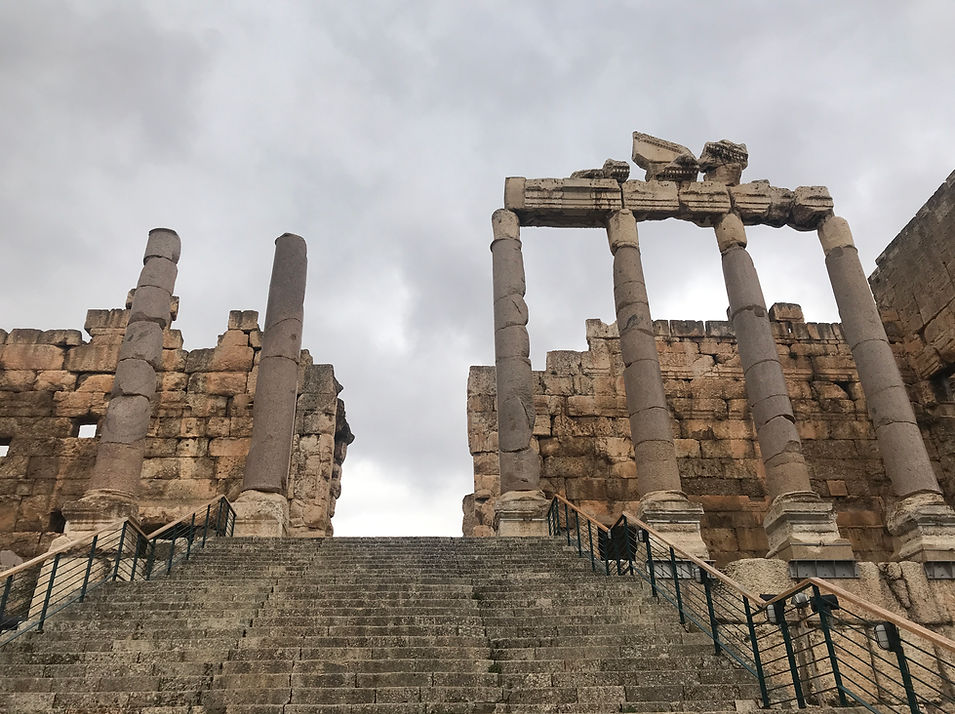
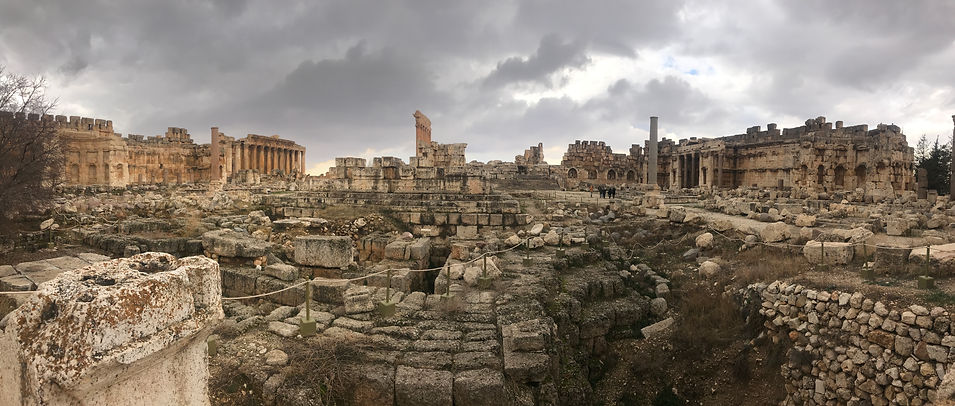
During the Ottoman rule, a mosque was built in the corners of the complex and the arches that are characteristic of the Arab rule are clearly visible. An extremely expansive complex, we spent around two hours soaking in the magnificence of the architecture. Towards the exit, there is a museum with some of the sculptures that were excavated from the site.
Unique to Baalbek is the dish, Safia Balbekia, a delicious pastry that can be made with fillings of meat or spinach. Best eaten fresh, a local recommendation we got was to buy the meat and have a restaurant whip up batches of Safia Balbekia.
Beqaa Valley
-
Vineyards
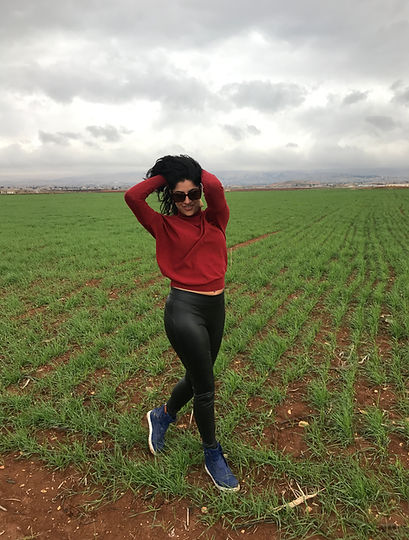
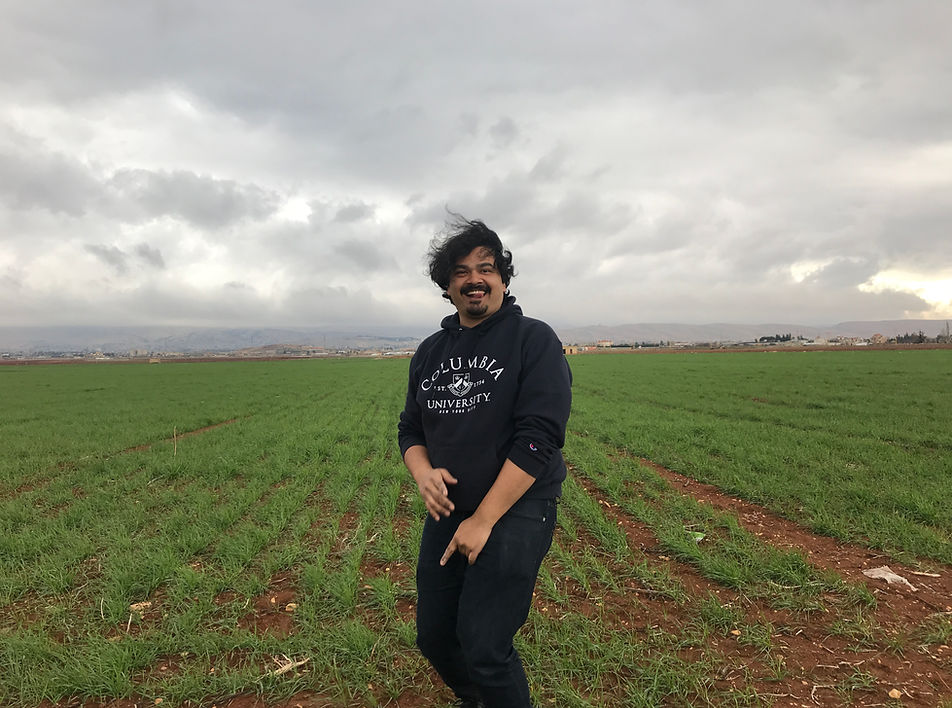
Beqaa Valley has acres of vineyards and we decided to drive through the valley to soak in the landscapes and beauty. If you are a wine lover, as Bacchus [the wine god ;)] would strongly advocate, wine tasting at the vineyards is a must.
Byblos [Spent 1.5 hours at the site]
-
Ruins of Byblos
-
Old Souk
-
Sunset at the Harbor
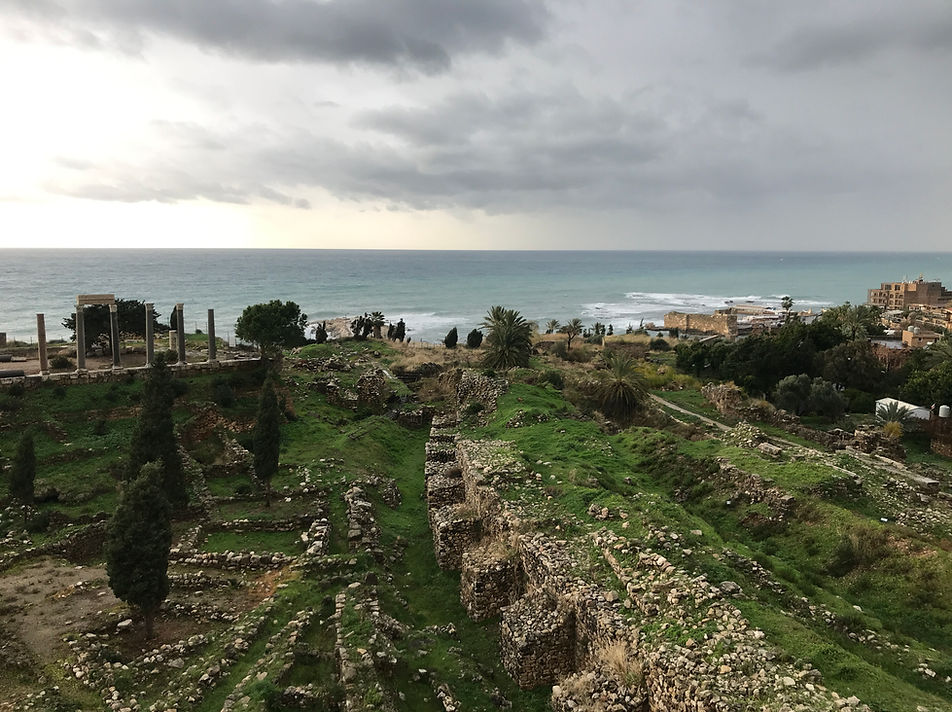
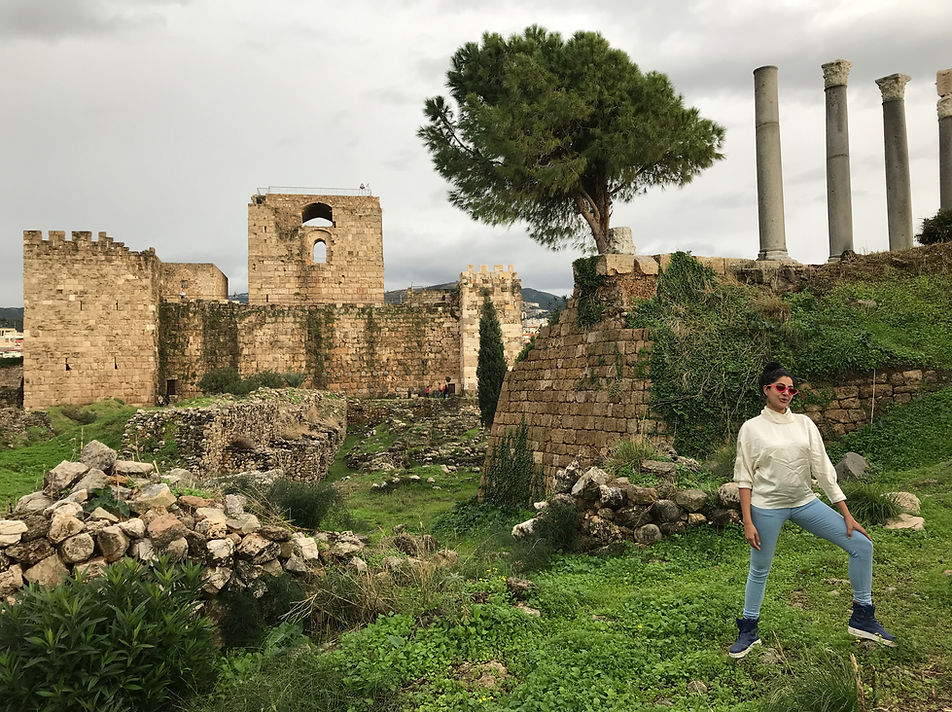

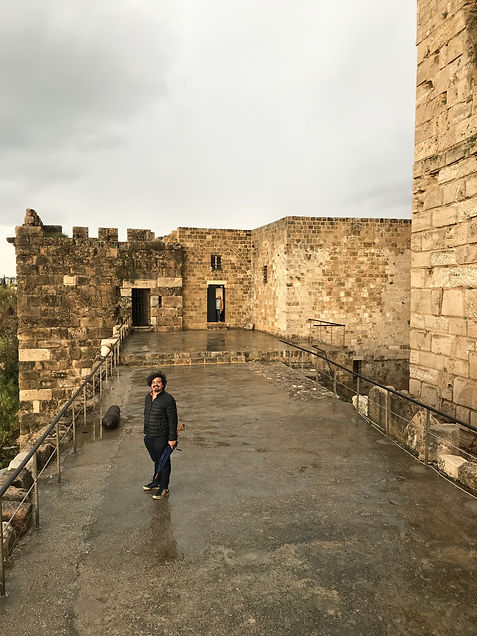


The oldest city that has remained continuously inhabited, Byblos, has a super fun vibe. Sunset by the harbor is a great way to soak in the coastal oceanic views. Close to the ruins and old souks are a series of restaurant options with fantastic cocktails and Lebanese food. Feniqia, a restaurant by the ruins, is known for its great food presentation and ambience.
The ruins of Byblos include remains from almost each civilization. The complex has a Crusader citadel, temple of Obelisks from Egypt, L-shaped temple, a temple dedicated to the Lady of Byblos, amphitheater from the Roman era, sarcophagus’ of Kings. Lebanon did not have any granite, so any granite that’s been found across the country was brought from Egypt.
Cedars of God
-
Cedars of God Forest

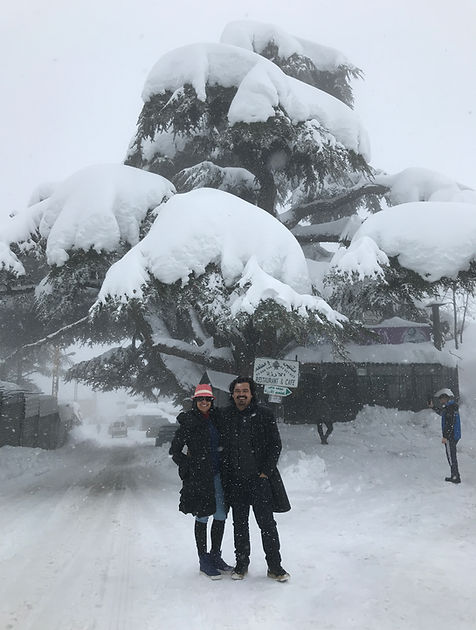
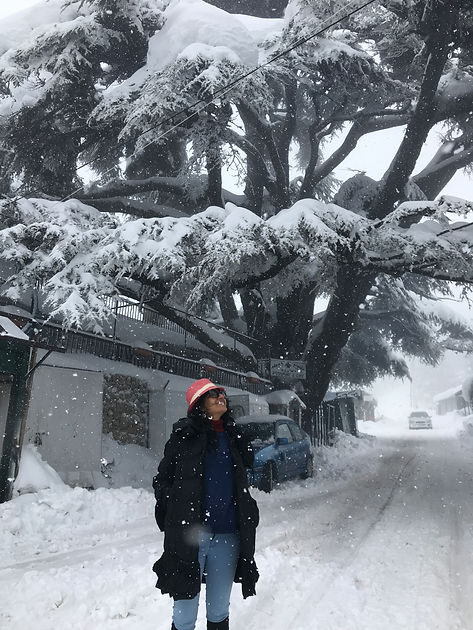

Since, we traveled during the month of December/January, it was snowing heavily. We had to re-trace our route from Baalbek because the roads were blocked and as we discovered, only the roads via Tripoli are typically accessible especially in the winters. Our experience at Cedars of God was out of the world adventurous. Not used to driving through snow, we struggled through the last 5 kilometers as the visibility was low and we couldn’t see the roads. We made it up only to find out that Cedars of God was closed! Regardless, we spent the night enjoying our cozy lodge and fireplace as the entire world around us snuggled into a white blanket of snow. We woke up to find our car dug in deep under 3 meters of snow. Our hotel staff was used to such adventures and they helped to launch us back on to the roads. We did drive by the Cedars of God forest and saw the oldest Cedar that has spread out its trunk like an Octopus in each direction embracing the little town in its 2000 years and more energetic presence. A strong memorabilia I will hold forever.

Batroun
-
Phoenician Wall
-
Old Souk
-
Lemonade
-
Biking through the streets
-
Roman Theater
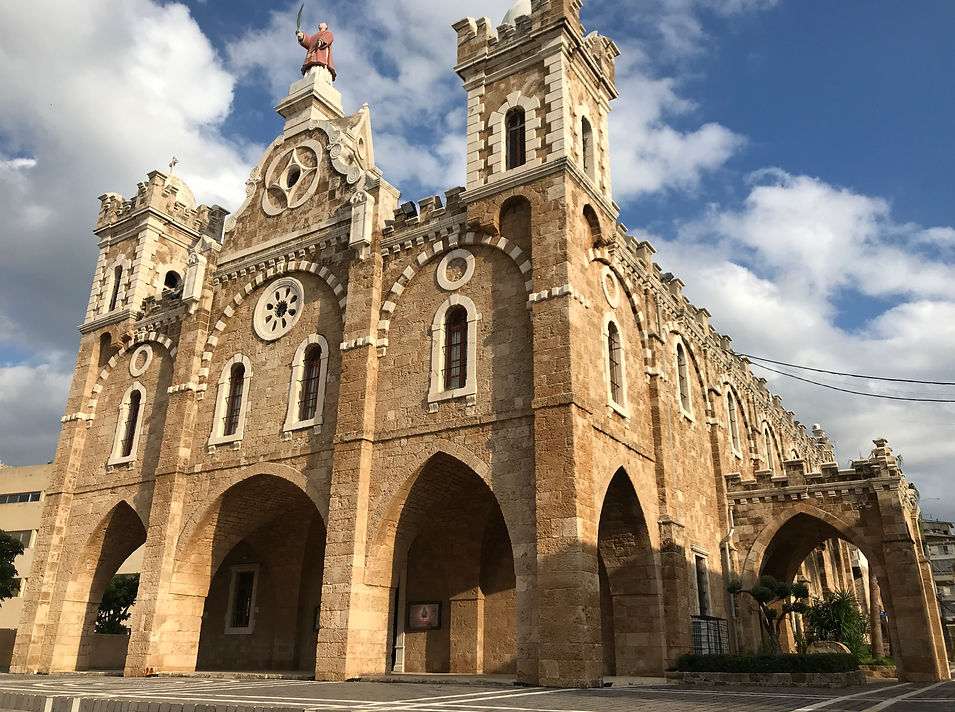


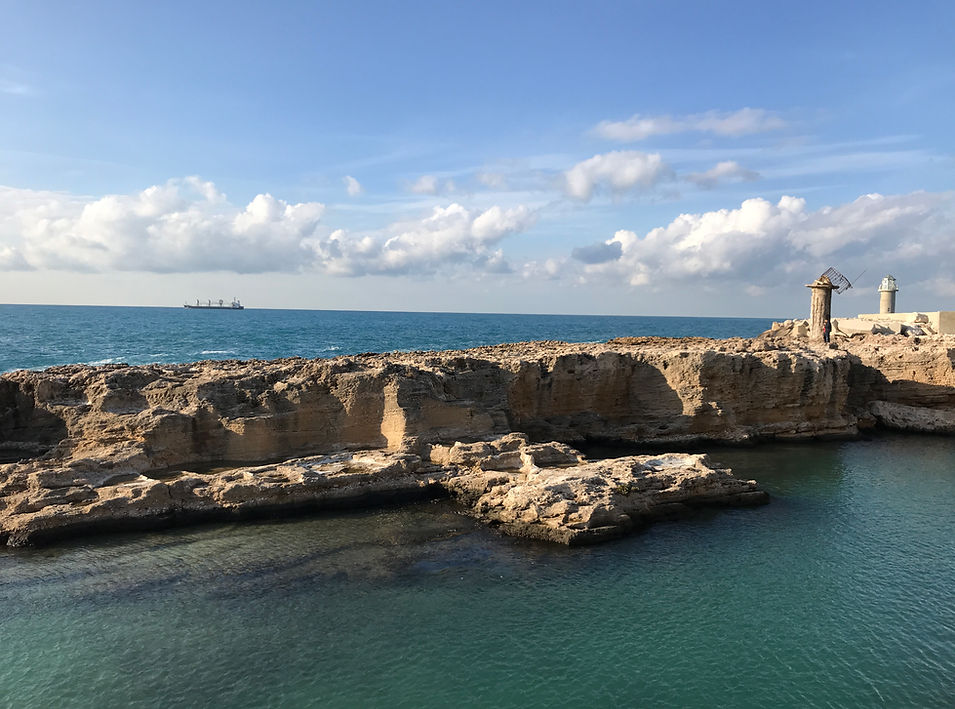
Batroun is the perfect spot for lunch and lemonade [a local recommendation that Batroun’s lemonade is a must-try]. Another coastal city, it is unique because of the Phoenician wall that extends far and wide. Standing on the wall, looking into the Mediterrean Sea has a unique charm. As one enters the Souk, there is an old signature seafood sandwich shop. Possibly, grabbing some rolls [we tried tuna raw fish and calamari] and sitting by the water could be an ideal Batroun experience.
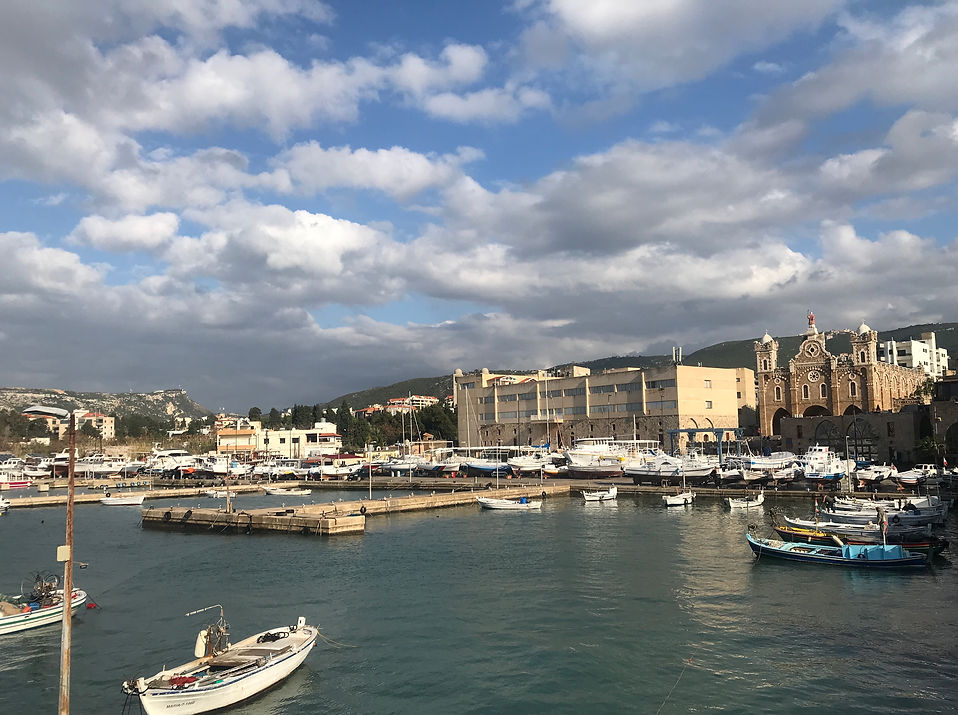
Tyre or Sour
-
World Heritage Site
-
Necropolis
-
Hippodrome
-
Christian Quarter
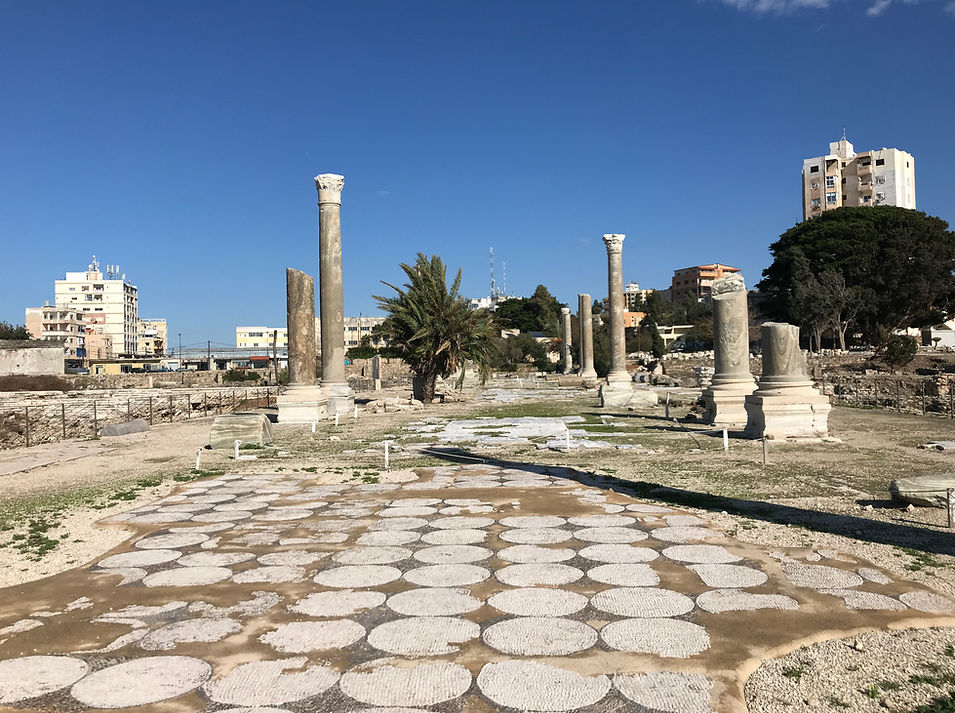

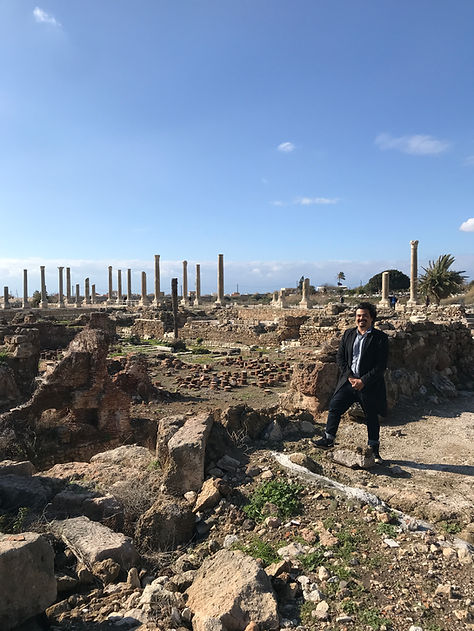


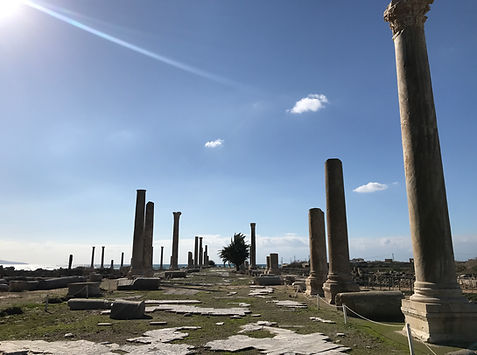

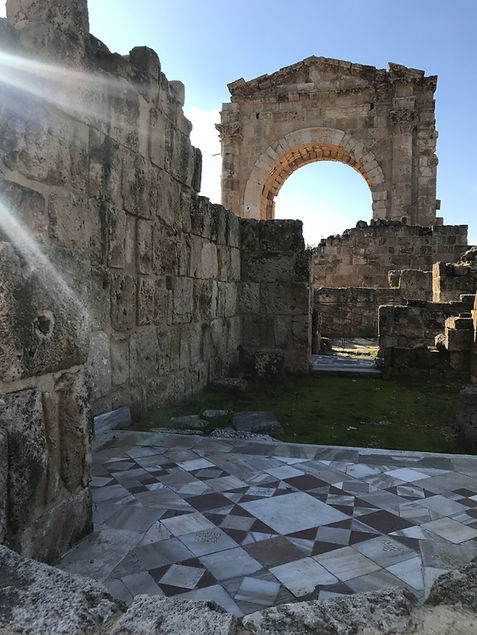
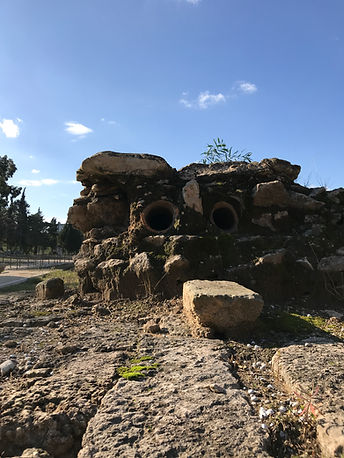
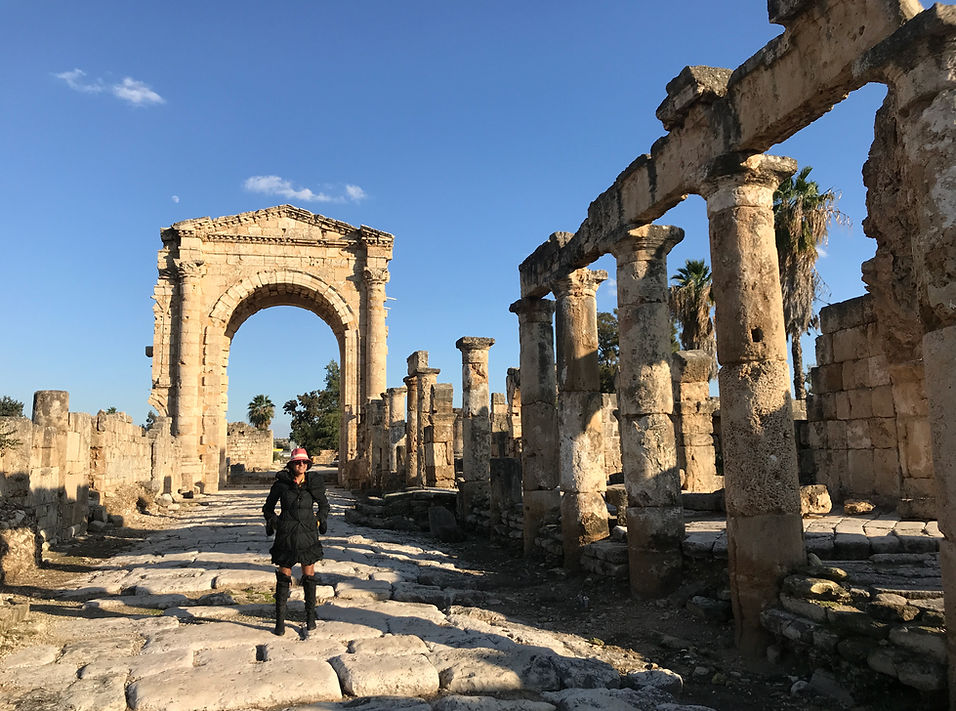
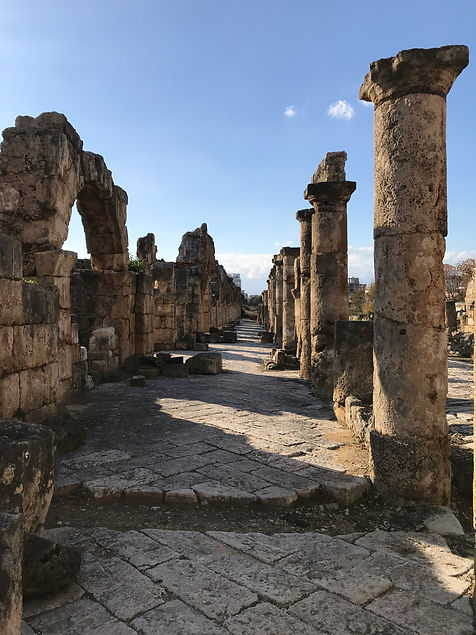
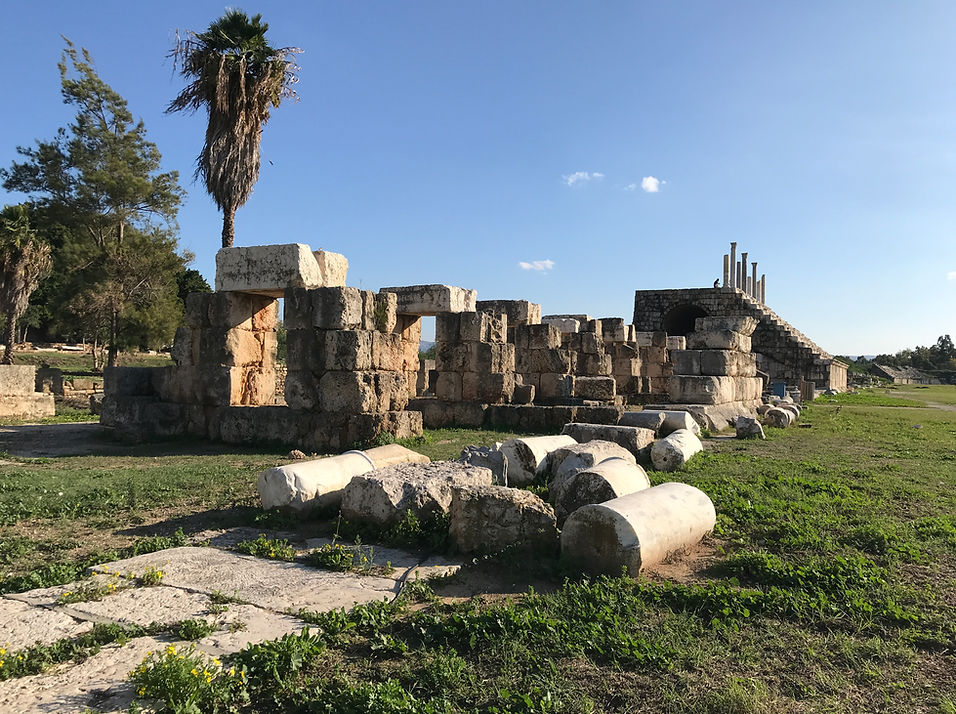
In the South of Lebanon, along the coast is the city of Tyre/Sour. There are three sites of ruins, which include a World Heritage Site, the Necropolis and Hippodrome. Located next to the coast, the world heritage site has a mosaic walk with intricate carvings from the Roman era. Initially connected to the other ruins, the Necropolis showcases arches and roads from the Byzantine and Roman time period. Quite phenomenal to walk the same roads, the different styles of Byzantine and Romans are highlighted. The Necropolis was a burial ground and held sarcophagus’ of well-off families. The Byzantines built a small church for each family and mosaics from the churches are still present. Varied sarcophagi were made using limestone or marble and had elaborate carvings, which included the name of the person buried, their occupation, where they were from and any additional information considered important. Bones from bodies have been recovered that currently lie in the Necropolis.
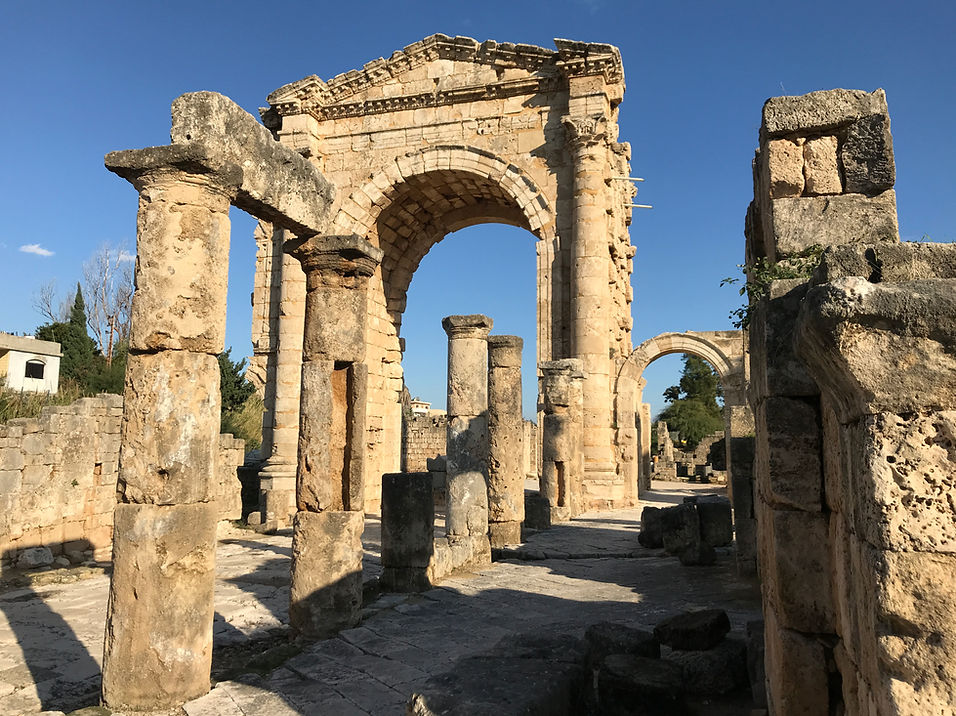
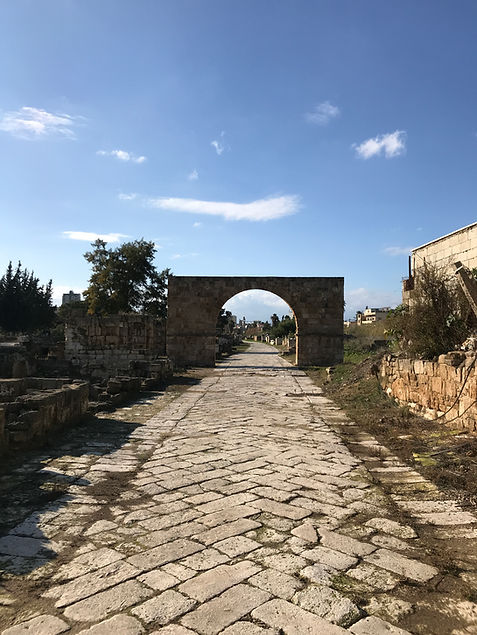
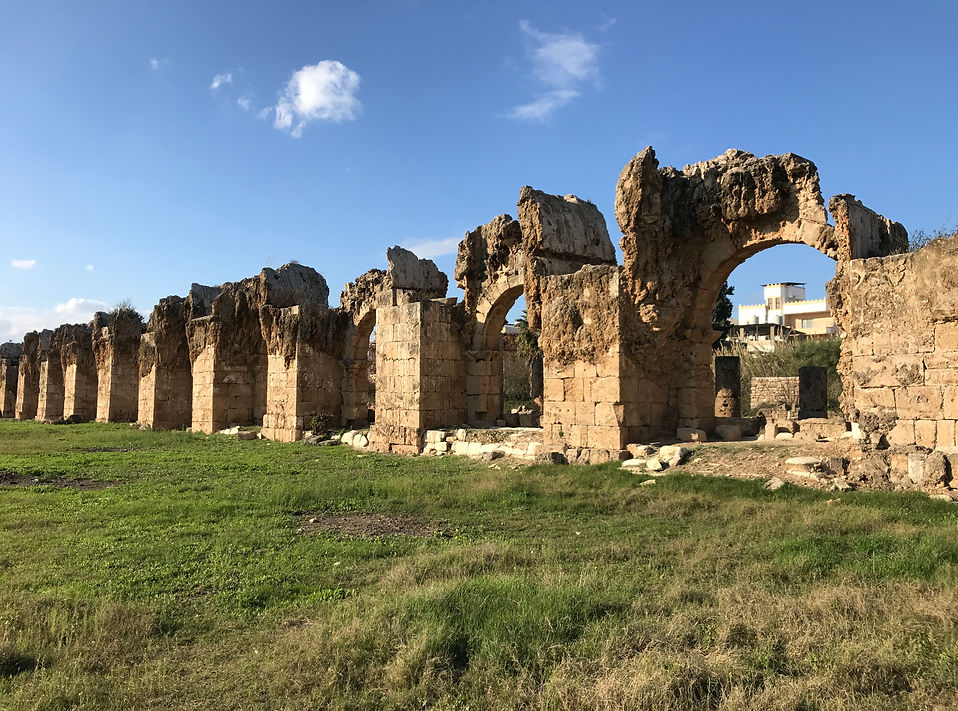

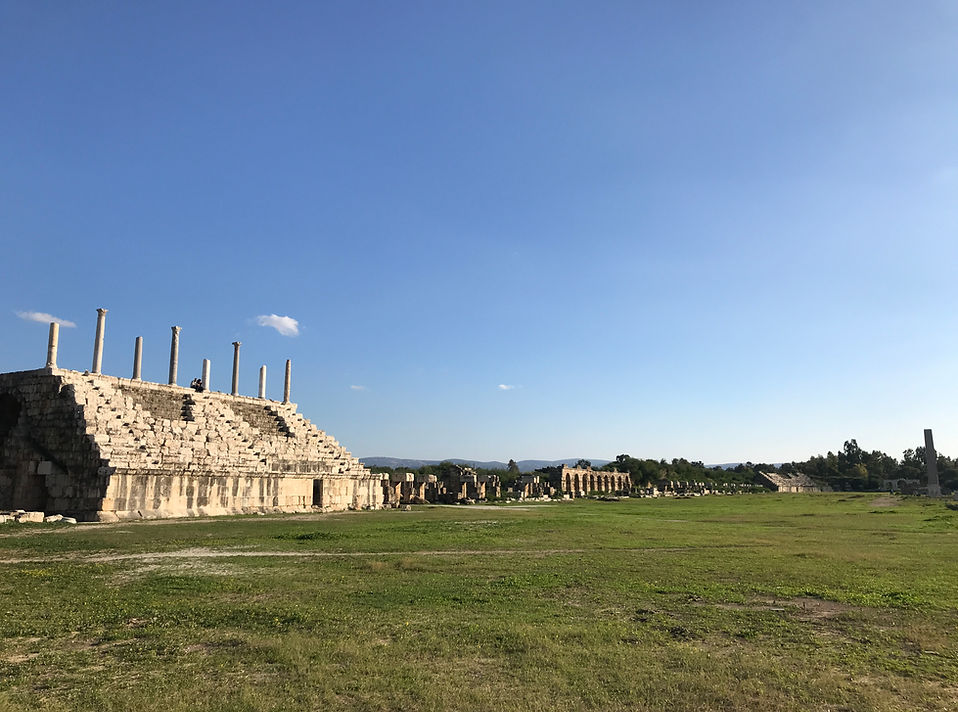
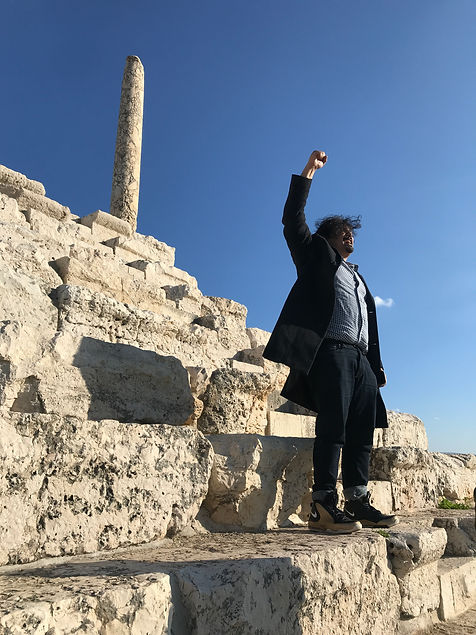
As one walks via the Roman roads, one proceeds into the Hippodrome where chariot horses used to be raced. Holding up to 40,000 people, a stadium existed that also housed shops underneath where folks would buy drinks and food as they prepared for an evening of entertainment.


Saida or Sidon
-
Sea Castle
-
Old Souk
-
Soap Factory
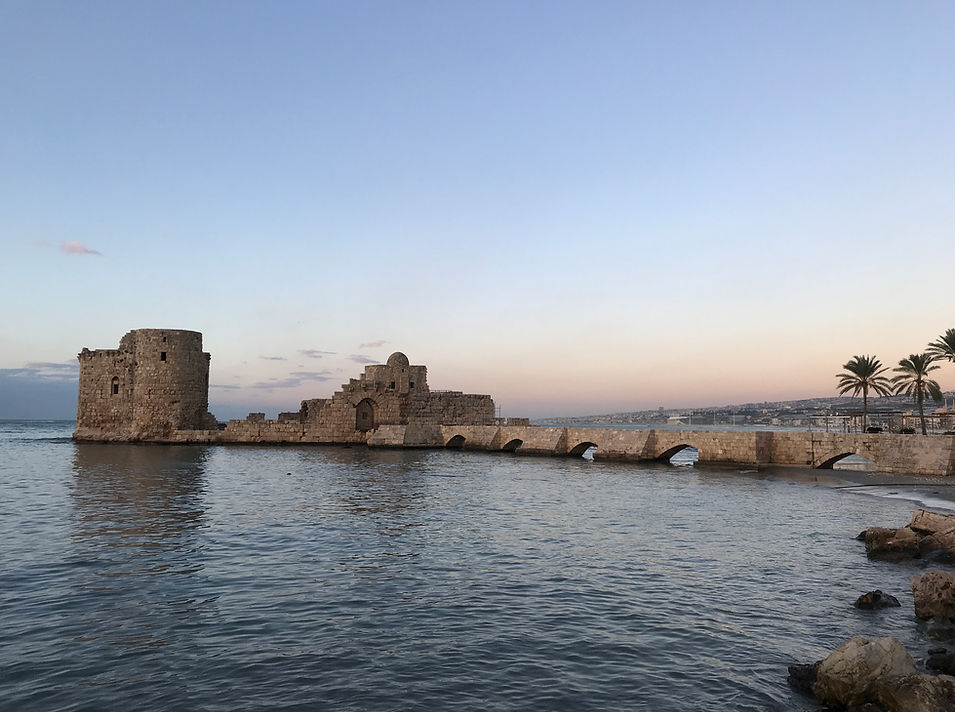
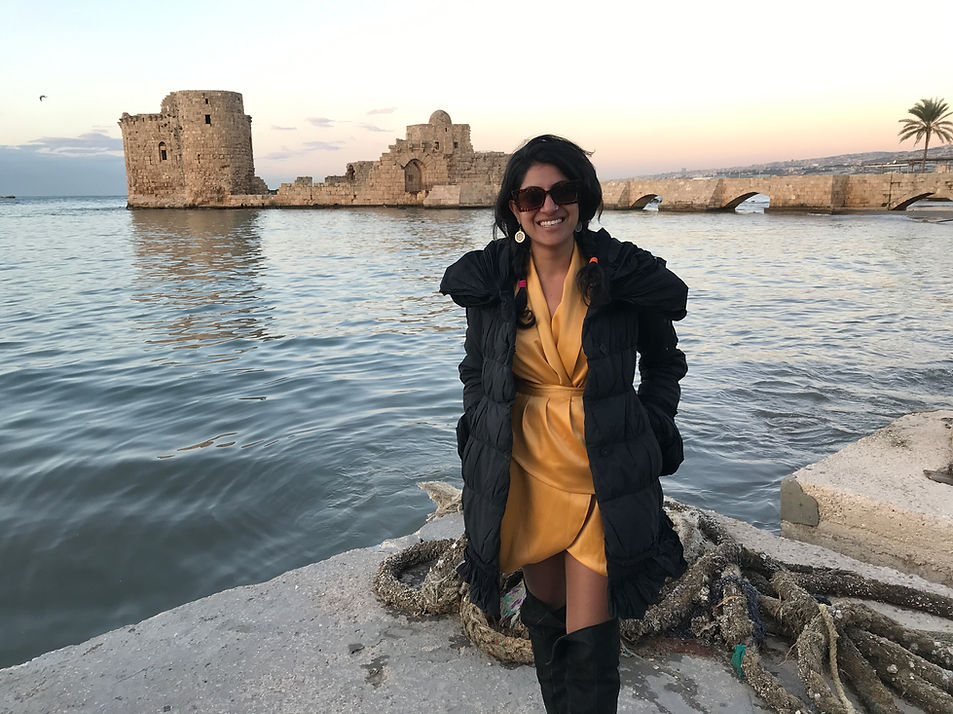
We made a pit stop in the town of Saida for the Sea Castle. It was within these walls that women and children had locked and burnt themselves when the city was under attack.
Saida is known for the soap factory because olive oil is used to make the soap.
Jeita Grotto
18 kilometers north of Beirut, we drove down by car to explore the hidden pearl, Jeita Grotto. The cost of the entrance ticket is $12.20, a cable car transported us to the entrance of the caves with a train awaiting us for our journey back, which is all included within the ticket. All phones are deposited in lockers to invite enjoyment of magic in the moment.
A breathtaking sight, Jeita Grotto is a wonder of nature concealed deep underground with magnificent larger than life caves adorned with centuries-old limestones formation. These stalactites and stalagmites are almost alive dancing forming unique patterns and making the human eye engage with wonderment. Upper Grotto entails a walk on foot and Lower Grotto has a boat ride taking riders through the crevices of the looming caves.

Historical Background
For history buffs out there, below is a brief insight on Lebanese history. I personally view history as a narrative that doesn't always take everyone's perspective and lived experience into consideration, so feel free to read with that in mind.
Phoenicians (1500 – 333 B.C.) are considered the very first ancestors of Lebanon whose civilization can be traced through artifacts. Records indicate that they were excellent salesmen and tradesmen who extracted purple dye found on shells and sold it to rulers across Europe. Moreover, Lebanon was known for its cedar trees as demonstrated on the Lebanese flag, which were also used for trade. At the time, Lebanese had no military protection and so cedar wood was given to the Egyptians in exchange for military support. In order to make the Egyptians feel more at home and further nurture the relationship, Egyptians gods were housed in Lebanese temples.
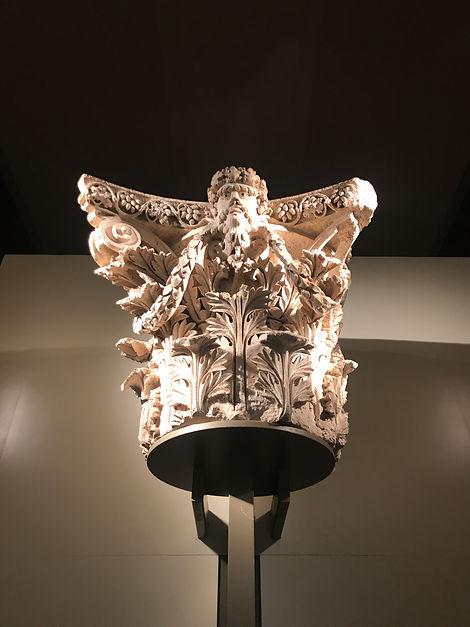
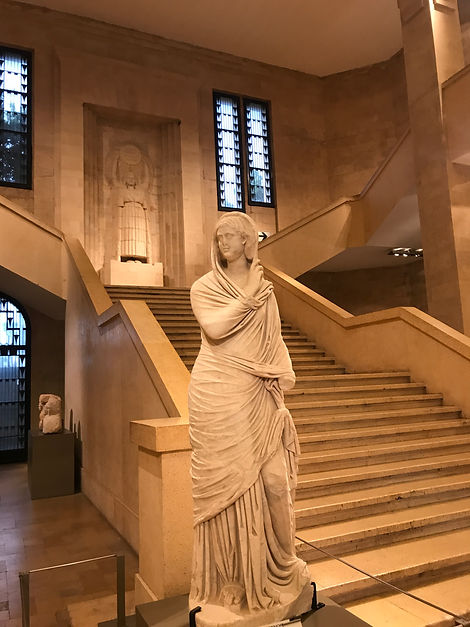
The Greeks arrived and ruled from 333-64 B.C. When Alexander the Great reached the city of Saida, the women and children closed themselves inside the city walls and burnt themselves. Tyre, was known as the city of dead since, it had a burial ground. For the duration of 8 months, the Greek army failed to conquer the city. The city had access to fresh water and thus, held siege. Alexander decided to build a bridge to reach the impregnable city. The bridge links the old city and the mainland and today, stands as a peninsula.
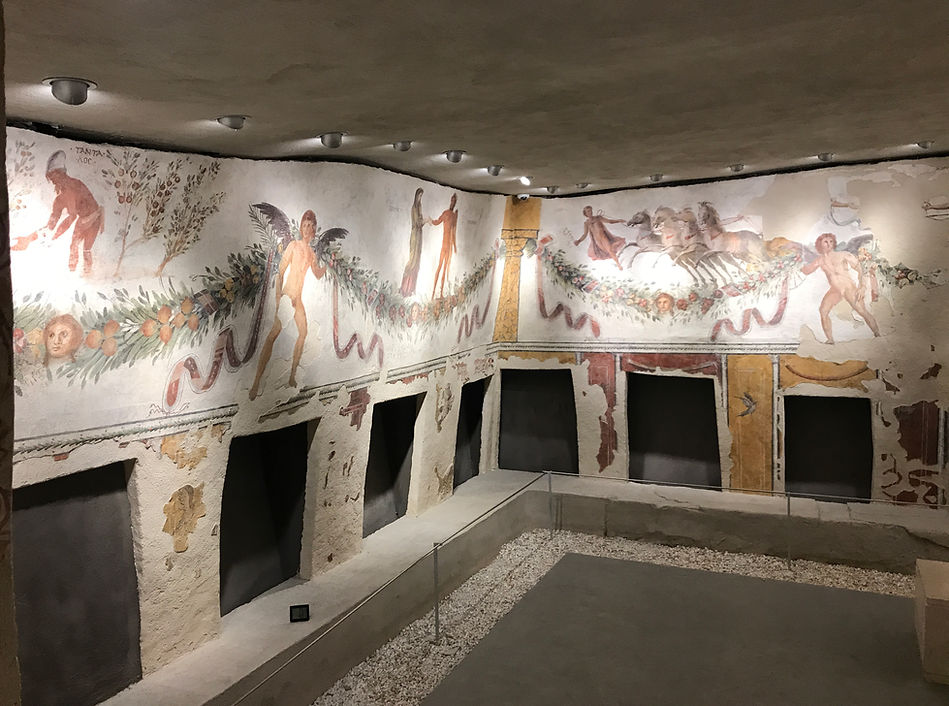
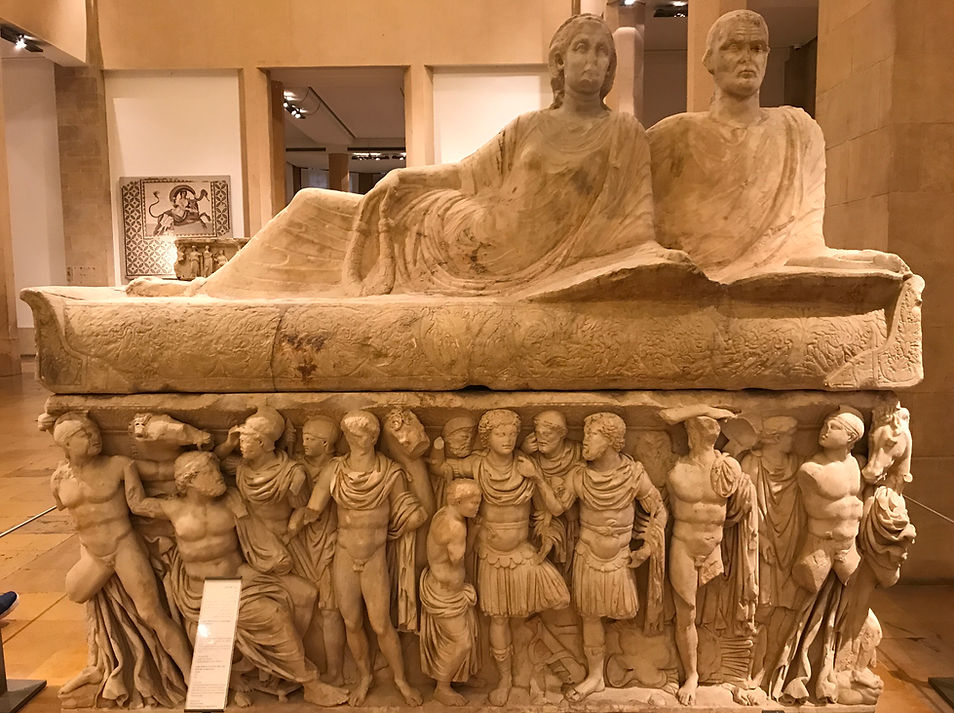
Next, from 64 B.C. – 395, the Romans reigned in Lebanon. The city of Beirut came to be known as the mother of law, because it had the first law school and as a student city it was exempt from taxes. Students were coming from across the region to study law. During the Roman era, the biggest Roman temple was built in the world in Baalbek known as Temple of Jupiter. Lebanon was considered strategically crucial because it connected the coastal areas to Damascus, which was the biggest city at the time.

The advent of Christ marks the Byzantine period (395 – 636), and during this time period the Roman temples were converted to Churches. Mosaics were introduced as an art form in this era.
Saudi Arabia was known to be Prophet Mohammad’s birthplace, which earmarks the Arab era (636 – 1098) and the spread of Islam from the Gulf area to Lebanon. Arabs have been known for their mathematicians, astronomers, doctors and architecture.
Thus, existed an amalgamation of pagans, Christians and Islam in the city of Beirut.
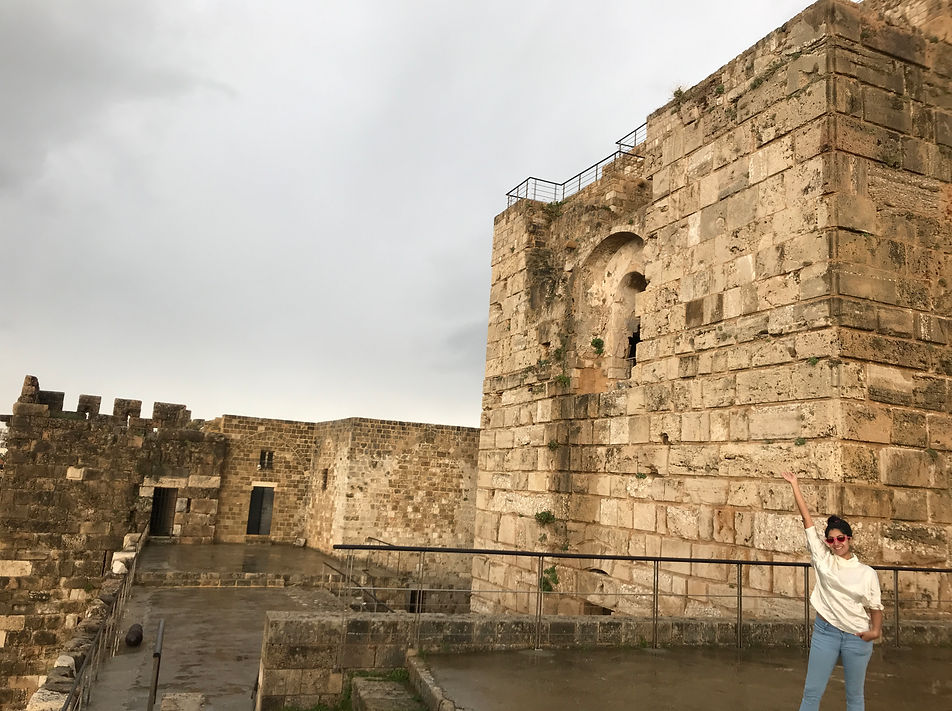
Thereafter, arrived the Crusaders (1098 – 1289), whose primary goal in Lebanon was to conquer coastal cities. They found the biggest structures that existed and destroyed them to build Crusader castles. For hundreds of years, there was constant fighting between Crusaders and Arabs resulting in the mix of both cultures.
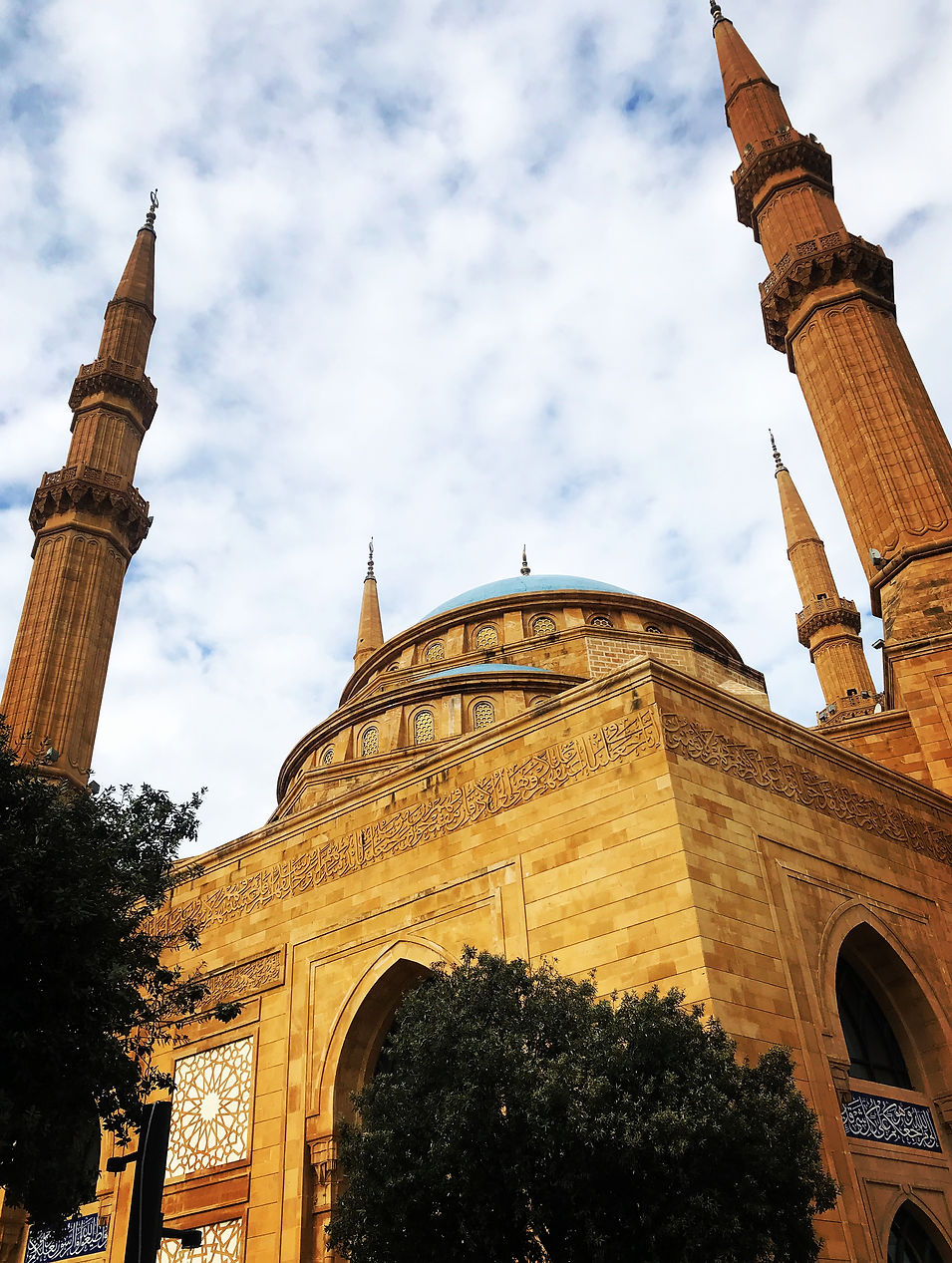
Mamluks (1289 – 1516) were slaves in Egypt. They won the revolution and brought with them a different style of architecture that hailed from North Africa.
From Turkey emanated the Ottoman Empire (1516 – 1918) ruling Lebanon for 400 years. During the Ottoman era, Lebanon was divided. North Lebanon went under Syria and South Lebanon was with the Palestinians. The exceptions were the city of Beirut and Mt Lebanon, which remained independent. Mt Lebanon was predominantly Christian and thus, the resistance against the Ottoman Empire was born. During World War I the Ottoman Empire collapsed.
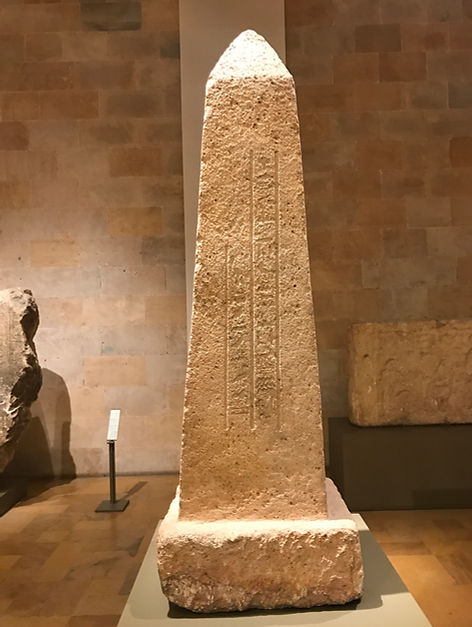
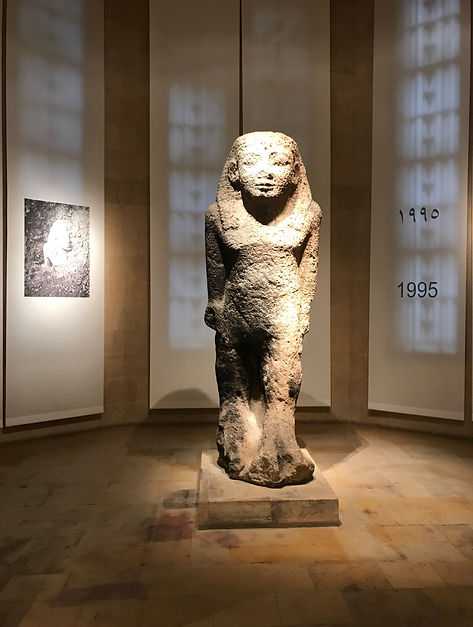
However, Lebanon failed to gain its independence and the French conquered Lebanon ruling from 1920 – 1943. They united both North and South Lebanon contributing to Greater Lebanon as its known today. The French funded schools, colleges and infrastructure including transportation. Even today, Lebanese laws are exactly the same as France.
During this time, the balance of power between the different religious groups and sects was dynamic. The Prime Minister was Muslim Sunni, whose desire was independence from the French and unification of Palestine, Syria and Lebanon. The French favored the Christians and in turn, the Christians wanted the French to stay because they were receiving funding to support their cause. The Prime Minister was jailed due to his dissent and thus, a compromise was drawn. The Prime Minister agreed to keep Lebanon separate from Palestine and Syria and the French granted Lebanon independence in 1943.
1943-1975 is considered Lebanon’s golden age. There was utmost freedom of speech and folks were writing to express strong opinions in addition to creatively engaging with the arts including poetry. Architecture was flourishing and Lebanon came to be referred as the Paris of the Middle East, Pearl of the Oil.
Civil War
For a long 15 years thereafter (1975-1990), raged a civil war. Tracing back to history, when the State of Israel was created, the Palestinians were exiled from their lands. Millions of Sunni Muslims ended up coming to Lebanon not only for protection and habilitation, but to resist and fight for their homes that had been taken away. Uniting with the Lebanese under the overarching identity of being Arabs, Palestinians and Lebanese challenged Israel. The Christians in Lebanon expressed that they felt threatened and thus, Israel / US started supporting the Christians by financing arms and ammunition.

It’s alleged that the civil war was sparked when a Palestinian-identifying individual murdered a Christian leader and the following day Christians burnt a bus with Palestinians that came to be known as the Ain el-Rammaneh incident. The war raged between Palestinians and Christian forces. The army stepped in but the army was also divided since, folks were both Muslims and Christians. No one really won, as is the case with most wars and the civil war ended with a ceasefire.

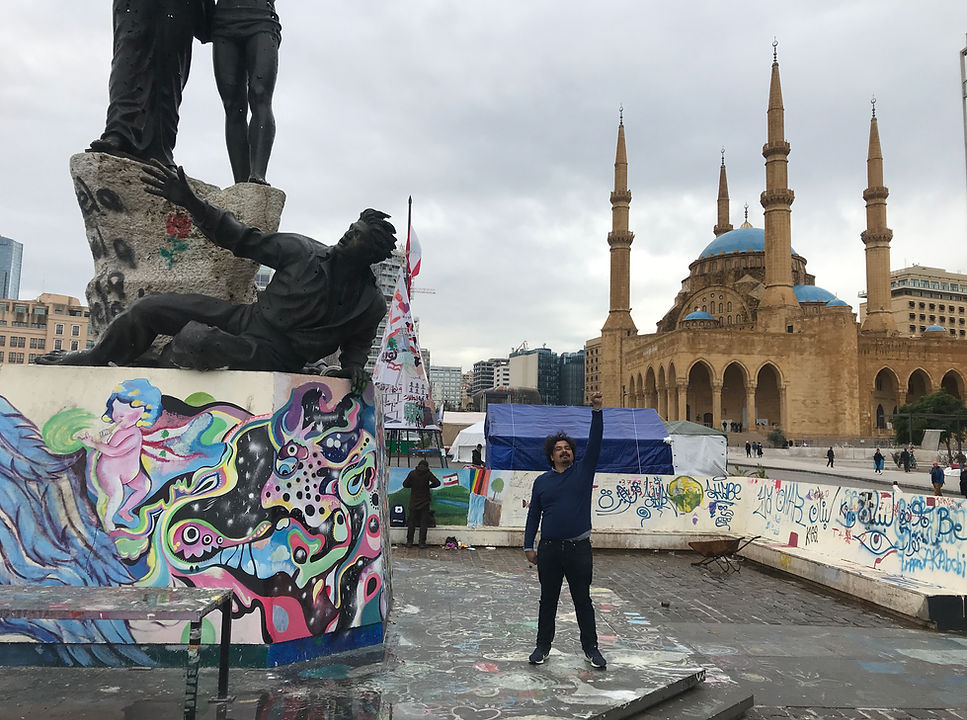
During the civil war, Beirut was divided with Christians primarily residing in East Beirut and Muslims in West Beirut. Martyr Square [the name arose because the Ottoman Empire hung Lebanese people in the square in 1916 leaving them hanging for days to enforce a message of fear] remained as a no mans land, because of which trees and vegetation grew, resulting in what was then called a green line that separated East and West Beirut.
Aftermath of Civil War and thereafter
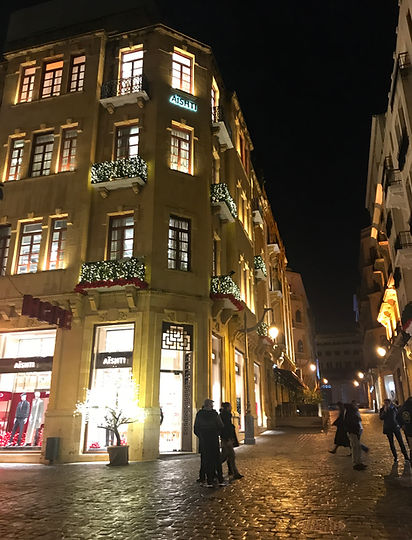
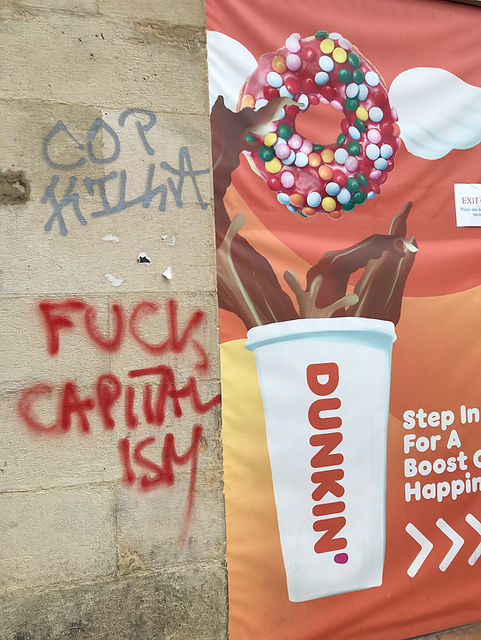
In 1992, Rafic Hariri became the Prime Minister of Lebanon and he took the onus of re-building the city of Lebanon that had been destroyed during the civil war. Rafic Hariri initiated the process of bringing in investments and a company called Solidere was founded, which transformed the face of Central Beirut. The Beirut Souks, which used to be a characteristic traditional market with local shops and delicious food now stinks of capitalism. Unfortunately, folks who owned shops in the souk had to sell their shops for a forced low price to Solidere. With only branded shops in the central square, the common people of Beirut don’t hang out in the square any more, one only sees tourists who have means to spend. Solidere regulates the property laws in the Souks and owners who managed to keep their buildings have had to really fight hard to preserve the old antiquities. Beirut folks are eagerly awaiting the culmination of Solidere’s contract, which ends in 5 years. Nonetheless, this new ‘business model’ has been considered a failure because even though there are high-rise offices and residential homes, they lie empty almost haunted.
Even though a national census was last taken only in 1932 because of religious tensions that continue to exist, it is estimated that 4 million Lebanese currently reside within Lebanon and 12 million live outside. Due to the elongated civil war and current economic collapse, the country is viewed as unstable and myriad tourists that used to visit from neighboring Gulf nations have considerably reduced as well. Two million tourists were recorded as visiting in 1963 and thereafter, in 2010.
Syria and Israel intervened during the civil war primarily to further their own respective interests. Until 2005, Syria was playing a role in controlling the army and governing the Lebanese Government. In the year 2005, however, 10-15 Lebanese leaders were assassinated including the Prime Minister, Rafic Hariri, who had re-built the city of Beirut. In 2006, Israel bombed Lebanon, which resulted in the formation of Hezbollah, a group that has been internationally declared a terrorist organization but is locally recognized as a group that keeps the Lebanese citizens especially at the Southern border safe. In 2010, the war in Syria broke out and has now been ongoing for a decade.
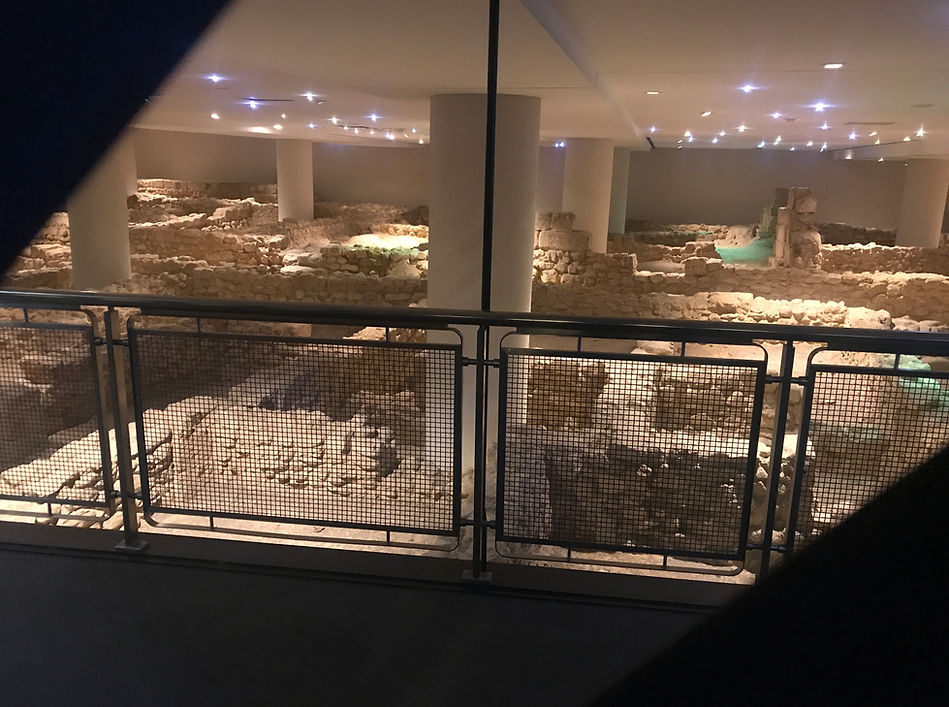
The city of Beirut is symbolized with a Phoenix, since it has been destroyed and re-built several times across civilizations and it continues to rise from the ashes. Fifty or more excavations have continuously revealed ruins and remnants that lie deep under Beirut. In the Central Square lies the garden of forgiveness, which are ruins from the Roman and Byzantine period. Adjacent is a Church that was constructed in 1882 with the clock tower built more recently. Typically, church clock towers stand at a height of 76 meters but a decision was taken to curb the height to 73 meters to align with the minarets of Al-Amin mosque that was built in 2002. The Mosque expanded around a prayer corner that was built in the 17th century.
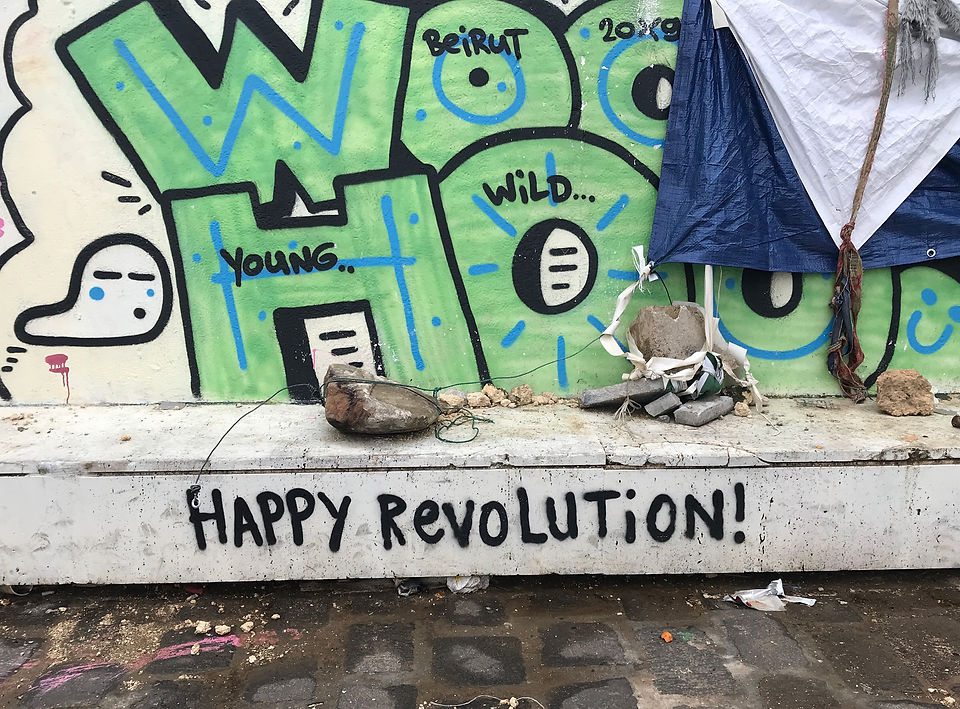
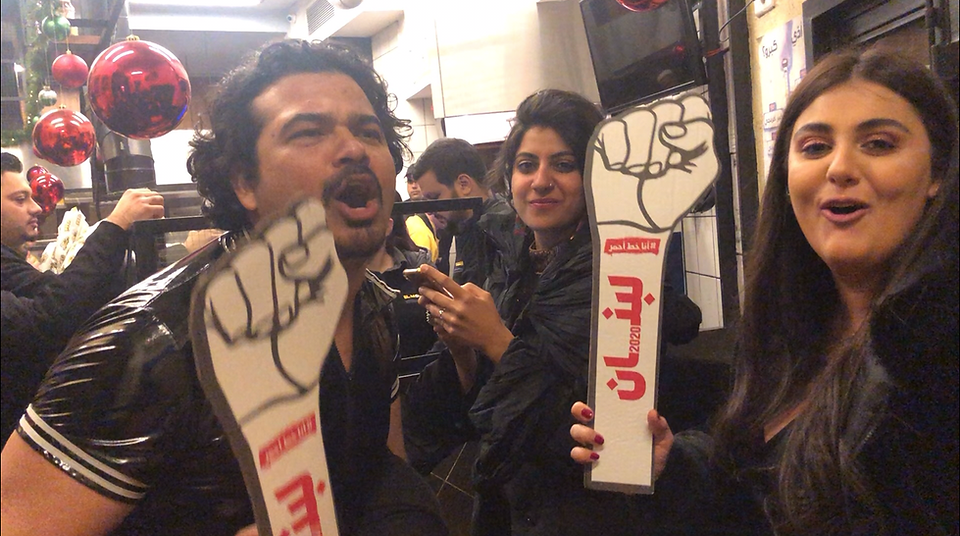
Revolution 2019
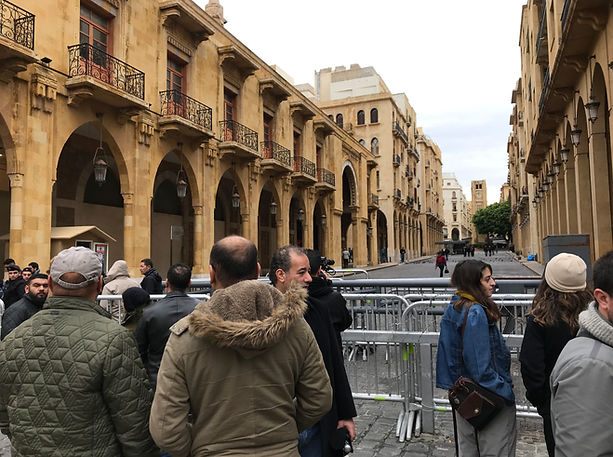
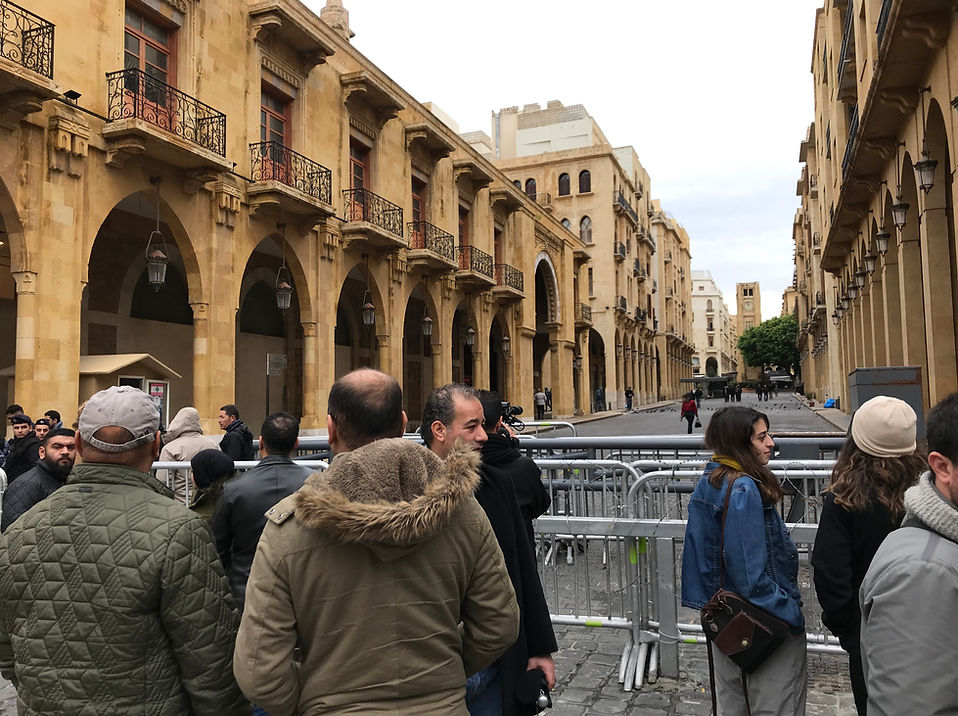
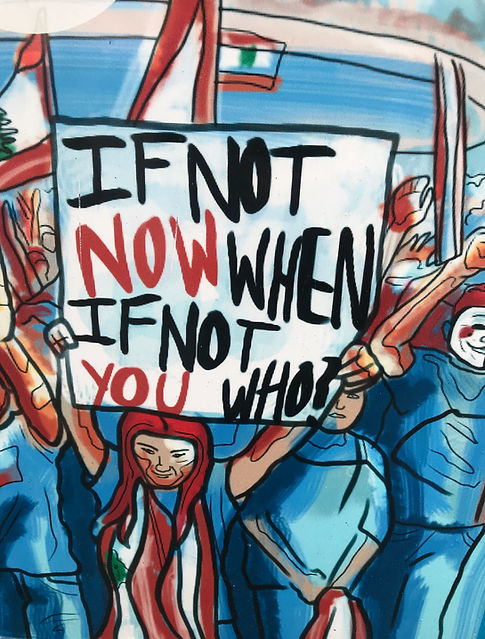
Unfortunately, political leaders continue to leverage religious divisions amidst communities for their personal gains. The revolution, however, has brought together the people of Lebanon in ways like never before. A couple of factors brewed the 2019 revolution. A series of bush fires broke out in Lebanon, which the Government failed to extinguish. The Government had bought helicopters using taxpayers’ money but had been apathetic towards its maintenance. Common people were highly frustrated since the Government had conveniently pocketed the funds while the people suffered in agony. Gas prices escalated while the value of the Lebanese pound continued to crash. However, when the Communication Minister took a decision to tax whatsapp and facebook voice calls, this was the trigger point that unleashed the revolution. Thousands of Lebanese took to the streets demanding Government accountability and elimination of corruption. Women are leading the revolution, especially since, women constitute 50% of the population where as only 2% are being represented in Parliament. The current demand is to change the electoral laws so that the citizens can vote in the serving political party. The Government has responded by cordoning off an entire square, within which stand the three evils [as expressed by the people] of the Parliament, Banks and Ministries off Government. Protests are being undertaken outside these barricades, as people demand access to public spaces and direct participation in democracy.
Present-Day Bayrouth
As one walks around the present-day city witnessing a transformed Beirut, the scars of the civil war remain visible. Old buildings stand amidst the shiny new as a reminder of the horrors the city has witnessed. One can still see the gunshots that have etched deep into the old buildings and soul of the nation. Many of these spaces had been barricaded by the Government and as part of the revolution folks tore down these barriers with a goal of reclaiming public spaces. Some locals dearly miss the traditional souk because many of the young people have never experienced what characterized Bayrouth as one of the oldest cities of the world.